

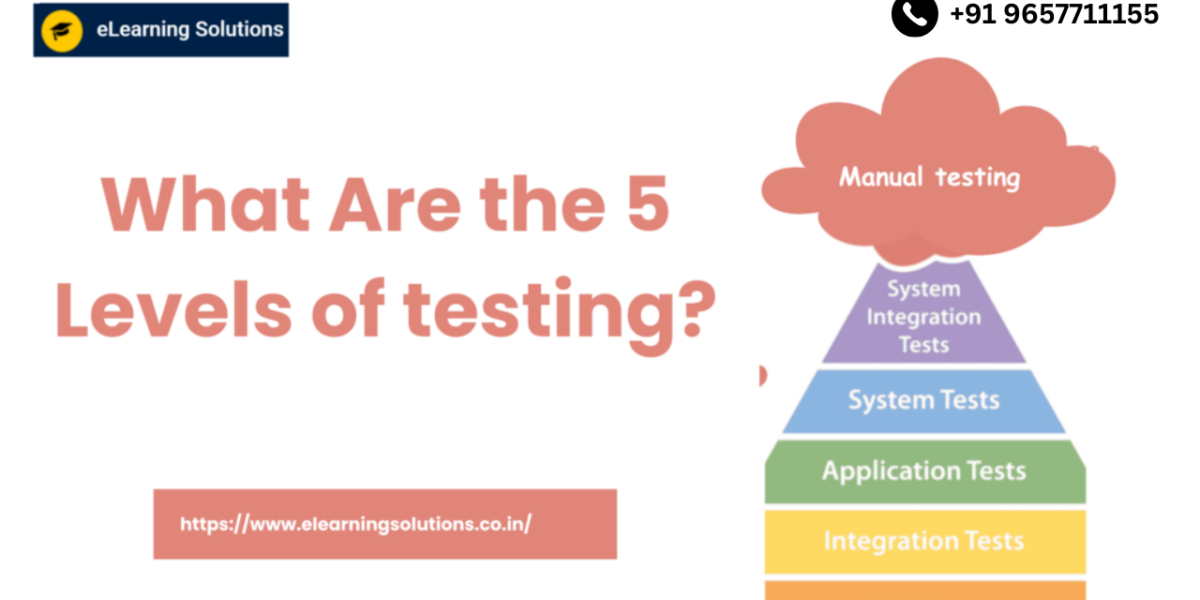
What are the five testing levels? A Beginner’s Guide to Software Testing Success
In the fast-paced world of software development, ensuring that an application functions correctly before its release is crucial. Software testing plays a key role in this process, and understanding its five levels can help beginners and company employees grasp the fundamentals of quality assurance. This guide will break down the essential levels of testing and how they affect software quality, making it useful for anyone who is new to testing or for an employer who wants to educate their staff. What Is the Importance of Software Testing? Imagine installing a financial trading app that crashes frequently and gives you incorrect stock prices. Not only would this frustrate users, but it could also cause financial losses and damage the company’s reputation. By finding and fixing bugs before the product reaches users, software testing prevents such scenarios. Now, let’s explore the five levels of testing and how they help deliver reliable software.
Unit Testing: The Foundation of Quality
Unit testing is the first level of testing, focusing on individual components or modules of the software. Developers typically perform unit tests to ensure that each function or method in the code works as expected.
Example: A banking app has a feature that calculates loan interest. Unit testing checks if the formula used for interest calculation produces the correct results.
Practical Tip: Automated testing tools like JUnit (for Java) or pytest (for Python) can help speed up the unit testing process.
Integration Testing:
Ensuring Seamless Connections
Once individual components are tested, they must work together. Integration testing verifies that different modules communicate correctly, preventing errors when they interact.
For instance, in order for an e-commerce platform to successfully process transactions, the payment gateway needs to seamlessly integrate with the order management system. Market Trend Insight: With the rise of microservices architecture, integration testing has become even more critical to ensure various services work together seamlessly.
System Testing:
Evaluating the Complete Product
System testing looks at the application as a whole to make sure it meets the needs of the business and works as intended. This level of testing simulates real-world usage scenarios.
Example: A stock trading platform undergoes system testing to ensure that users can place trades, view live market data, and access account balances without glitches.
Pro Tip: Conduct system testing in an environment that closely resembles the production environment to identify any potential performance issues before release.
Acceptance Testing:
Meeting User Expectations
Acceptance testing determines whether the software is ready for release by checking if it meets business and user requirements. It includes user acceptance testing (UAT), where actual end-users test the application.
For instance, before launching a mobile banking app, a group of users tests it to ensure that features like bill payments and fund transfers work properly. Motivational Thought: Software testing isn’t just about finding bugs; it’s about ensuring customer satisfaction and trust.
Software Integrity Maintenance
Through Regression Testing Regression testing ensures that new code changes do not break existing functionalities. Every time a software update is made, regression tests verify that previous features still work correctly.
Example: A finance app adds a new investment tracking feature. Regression testing ensures that older functions, like portfolio management, still work properly.
Practical Tip: Use automated regression testing tools like Selenium or Test Complete to make this process more efficient.
Final Thoughts: Your First Step Toward Software Testing Mastery
Software testing is not just about fixing errors—it’s about delivering quality and building trust. Take it one level at a time if you’re new to testing. Companies that invest in proper testing practices avoid costly failures and enhance user satisfaction.
Are you ready to dive deeper into the world of software testing? Explore our advanced learning resources on [Your Website Name] and take your skills to the next level
YOU MAY BE INTERESTED IN
ABAP Test Cockpit(ATC) – Introduction and Steps
Salesforce Developer Salary in India An In-Depth Analysis
SAP MM Consultant resume 3 years experience
Advanced OOP Concepts in SAP ABAP A Comprehensive Guide
Error: Contact form not found.


 WhatsApp us