
How the brain works?
The human brain is one of the most complex and fascinating organs in the body. It controls our thoughts, emotions, actions, and the functions of all other organs in the body. In this blog, we will explore the fascinating world of the brain, how it works, and its role in shaping our lives.
How the brain works? The brain is an incredibly complex and fascinating organ that serves as the command center of the human body. It controls our thoughts, emotions, movements, and regulates various bodily functions. While our understanding of the brain is still evolving, scientists have made significant progress in unraveling its mysteries.

How the brain works?: Anatomy of the Brain
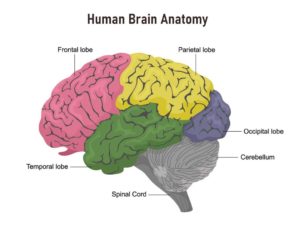
The cerebrum is an organ situated in the skull and weighs around 3 pounds. It is comprised of billions of neurons, glial cells, and different kinds of cells. The mind can be isolated into three significant parts: the frontal cortex, cerebellum, and brainstem.
The frontal cortex is the biggest piece of the cerebrum and is liable for thinking, memory, and development. It is partitioned into two sides of the equator, the left and the right, which are associated by a thick heap of nerve filaments called the corpus callosum.
The cerebellum is situated under the frontal cortex and is liable for planning development, equilibrium, and stance.
The brainstem interfaces the cerebrum to the spinal rope and is answerable for controlling essential life-supporting capabilities, for example, breathing, pulse, and circulatory strain.
How the Brain Works?
How the brain works? The brain is constantly receiving information from the environment through our five senses: sight, hearing, touch, taste, and smell. This information is processed and interpreted by different areas of the brain, which then generates appropriate responses.
Neurons are the essential structure blocks of the mind and speak with one another through electrical and compound signs. The associations between neurons are called neurotransmitters, and they permit data to move starting with one neuron then onto the next.
At the point when neurons speak with one another, they structure complex organizations that are answerable for different capabilities like language, memory, feelings, and development.
The mind additionally has specific regions for various capabilities, for example, the visual cortex, which processes visual data, and the prefrontal cortex, which is liable for direction and arranging.
How the Brain Works: The Brain and Behavior.
The mind assumes a basic part in shaping our way of behaving. Our contemplations, feelings, and activities are undeniably impacted by the intricate associations among neurons and different mind locales.
For instance, the amygdala, a little almond-molded structure found profound inside the mind, is liable for handling feelings like trepidation and hostility. At the point when we experience a danger, the amygdala conveys a message to the nerve center, which initiates the thoughtful sensory system, prompting the instinctive reaction.
Additionally, the prefrontal cortex, situated in the forward portion of the cerebrum, is answerable for navigation, drive control, and arranging. It is engaged with leader works like working memory, mental adaptability, and inhibitory control.
The mind is likewise equipped for adjusting and changing in light of encounters, a cycle known as brain adaptability. This implies that the cerebrum can redesign its brain associations in light of new data, learning, and injury.
How the Brain Works: How Do Neurons Function?
The cerebrum is comprised of billions of nerve cells called neurons. Neurons speak with one another through electrical and substance signals. At the point when a neuron gets a sign from another neuron, it sends an electrical drive down its axon, which discharges compound synapses that speak with the following neuron. This cycle is called synaptic transmission.
How the Brain Works: Understanding the Organization of the Brain
The mind is coordinated into three principal parts: the forebrain, midbrain, and hindbrain. The forebrain incorporates the frontal cortex and the thalamus, which are liable for tactile and engine handling. The midbrain is answerable for organizing development, and the hindbrain incorporates the brainstem and the cerebellum, which control indispensable capabilities like breathing, heartbeat, and equilibrium.
Conclusion on how the brain works
The cerebrum is a captivating and complex organ that assumes a basic part in significantly shaping our lives. It is answerable for everything from fundamental life-supporting capabilities to higher-request cycles like feelings, contemplations, and conduct.
By understanding how the brain works, we can better understand ourselves and the world around us. While there is still much to learn about the brain, ongoing research is shedding light on this complex and fascinating organ, offering hope for new treatments and therapies for a range of neurological and psychiatric disorders.
We at eLearning solutions provide SAP courses online & offline.To get course details you can click here.
From SAP implementation to SAP migration, get everything that you need in one place. If you want to know how we can add value to your business, get in touch with our experts today!
Interested in these SAP Classes? Fill Your Details Here
Error: Contact form not found.




 WhatsApp us