
Digital transformation is no longer about moving everything to the cloud—it’s about moving smartly, efficiently, and strategically. In the past, companies were locked into massive ERP deployments that were complex, expensive, and time-consuming. But that era is changing fast. The modern business world demands flexibility, scalability, and speed, and this is where Modular ERP—particularly within the SAP ecosystem—has become the game changer. SAP’s cloud-based modular approach is redefining how organizations build, deploy, and evolve their enterprise systems.
For decades, traditional ERP systems operated as all-in-one monoliths. They worked well for a time, providing integrated processes for finance, supply chain, human resources, and more. However, these large, interconnected systems often struggled to keep up with the rapid pace of business innovation. Customizing one component could mean impacting another, upgrades were complex, and innovation cycles were slow. The introduction of Modular ERP represents a complete shift in mindset—an evolution that prioritizes business agility, rapid deployment, and continuous innovation over heavy, one-size-fits-all architectures.
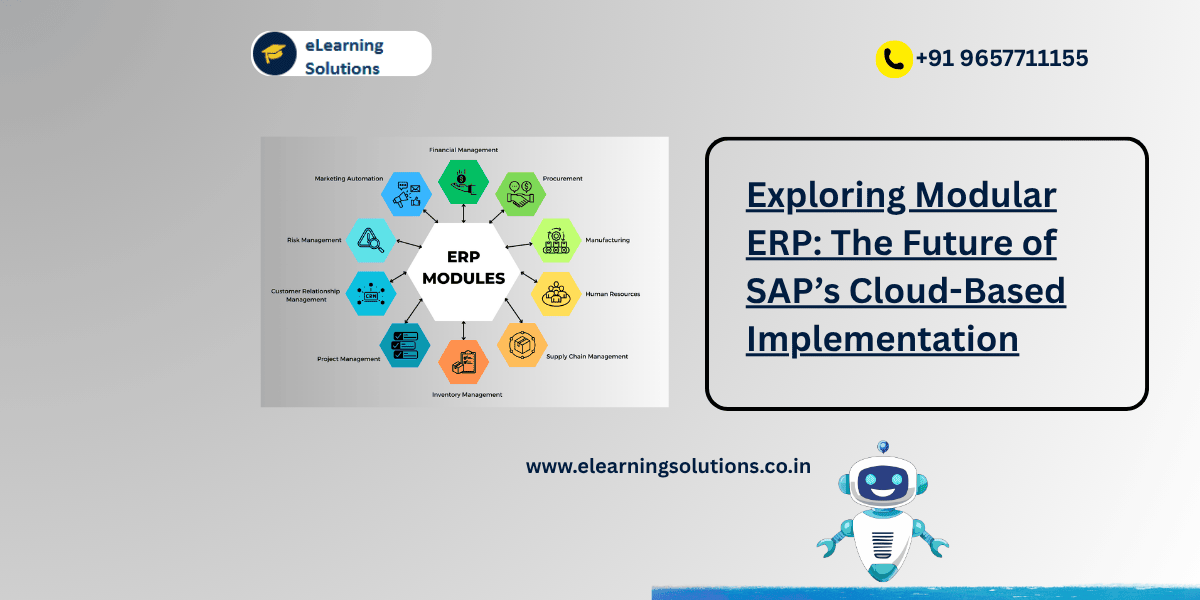
At its core, Modular ERP breaks down the enterprise system into flexible, independent modules that can be implemented, updated, or replaced without disrupting the entire ecosystem. This modularity aligns perfectly with SAP’s move toward cloud-based ERP solutions, led by SAP S/4HANA Cloud, which gives businesses the power to adopt the capabilities they need, when they need them. Whether it’s financial management, procurement, human capital, or supply chain, each function can now be deployed as an independent service, integrated through APIs and powered by the SAP Business Technology Platform (BTP).
Imagine a global manufacturer that needs to modernize its procurement process but isn’t ready to overhaul its entire ERP system. With Modular ERP, the company can implement SAP’s procurement cloud module first, connect it seamlessly to the existing finance and inventory systems, and expand later into other areas like supplier management or logistics. This step-by-step approach dramatically reduces risk, cost, and downtime, making transformation achievable for organizations of all sizes.
SAP’s modular strategy also aligns with broader market trends. As of 2025, research shows that over 60% of enterprises are adopting modular or composable ERP models to support digital agility. The idea of a “composable enterprise”—one built from interchangeable and reusable components—is driving a new wave of innovation across industries. SAP is at the forefront of this evolution, enabling organizations to assemble their ERP landscape like building blocks, creating a tailored solution that evolves with business needs.
One of the most powerful aspects of SAP’s Modular ERP is its ability to integrate seamlessly across cloud and hybrid environments. Businesses no longer need to choose between full cloud adoption and on-premise systems. SAP’s cloud platform enables hybrid deployments, allowing companies to extend their existing on-premise systems with cloud-based modules. This hybrid flexibility is especially beneficial for large enterprises that must balance legacy infrastructure with modern innovation.
In practice, this means organizations can deploy SAP S/4HANA Cloud for finance while continuing to run manufacturing operations on-premise, with both systems communicating in real time through SAP BTP. The result is a connected, intelligent enterprise where every process—from planning and procurement to analytics and reporting—operates cohesively.
Beyond flexibility, Modular ERP brings another crucial advantage: faster time to value. In traditional ERP rollouts, full implementation could take years before businesses saw measurable results. Modular deployments, on the other hand, allow organizations to start small, achieve quick wins, and build momentum as they expand their digital ecosystem. This “start anywhere, go everywhere” approach is one of the reasons SAP’s modular ERP model has gained strong traction among mid-sized and growing businesses that need results quickly.
Another transformative factor driving Modular ERP adoption is the integration of artificial intelligence (AI), analytics, and automation. In SAP’s cloud ecosystem, each module isn’t just a functional component—it’s infused with intelligence. For example, the finance module includes AI-driven forecasting and reconciliation, while the procurement module automates supplier evaluation using predictive analytics. These capabilities enable companies to move from reactive management to proactive strategy, where systems anticipate needs and optimize operations automatically.
The benefits extend beyond operations to innovation. Because Modular ERP is built on open standards and APIs, businesses can easily integrate third-party applications or build their own extensions. Developers and IT teams can innovate on top of SAP’s ecosystem using low-code tools from SAP BTP, ensuring their systems stay future-ready and adaptable to changing requirements. This approach is particularly valuable in industries like retail, manufacturing, and healthcare, where rapid innovation is critical to maintaining competitive advantage.
Market leaders are already showcasing the success of modular ERP transformation. For instance, companies in the automotive industry are using SAP’s modular cloud approach to connect production, logistics, and supplier ecosystems, enabling real-time visibility across global operations. In retail, modular ERP allows companies to unify inventory and e-commerce systems, improving stock accuracy and customer satisfaction. Even public sector organizations are adopting SAP’s modular ERP to digitize processes and improve service delivery without large-scale IT disruptions.
Another driving force behind this transformation is cost efficiency. Modular ERP allows businesses to pay only for what they use. Instead of investing in an entire ERP suite, organizations can adopt individual modules relevant to their current needs and expand as they grow. This subscription-based cloud model not only reduces upfront costs but also ensures predictable ongoing expenses—an attractive proposition in today’s budget-conscious business environment.
Security and compliance, often top concerns in cloud transformation, are also deeply integrated into SAP’s modular architecture. Each module inherits SAP’s robust security framework, ensuring compliance with global standards like GDPR, ISO, and industry-specific regulations. This means organizations can innovate with confidence, knowing their data is protected across every cloud deployment.
The evolution toward Modular ERP also marks a cultural shift within enterprises. It encourages collaboration between IT and business units, where technology becomes an enabler of innovation rather than a barrier. Business leaders can work with IT teams to identify the most impactful modules, deploy them rapidly, and continuously refine operations based on real-time feedback. This agile mindset not only accelerates transformation but also fosters a culture of continuous improvement.
As we look toward the future, the potential of Modular ERP in SAP’s cloud-based implementation continues to expand. With advances in AI, machine learning, and integration technologies, ERP systems are becoming more intelligent, autonomous, and adaptive. In the next few years, we can expect SAP’s modular ERP ecosystem to become even more connected—with predictive maintenance, sustainability tracking, and business network collaboration all operating as seamlessly integrated modules within a unified cloud environment.
For beginners exploring SAP or organizations considering their next step in digital transformation, understanding Modular ERP is essential. It represents more than a technological upgrade—it’s a strategic approach to building a future-ready business. By adopting modular ERP, companies gain the freedom to innovate continuously, scale efficiently, and adapt quickly to market changes without the complexity of traditional ERP transformations.
SAP’s modular ERP is not just the future—it’s the present, empowering organizations across industries to become more intelligent, agile, and resilient. Whether you’re an IT professional, business leader, or aspiring SAP consultant, now is the perfect time to deepen your understanding of how modular ERP can transform enterprise operations and open new possibilities for innovation.
Call to Action: Ready to explore how Modular ERP can transform your business with SAP’s cloud-based implementation? Visit our website to access detailed guides, hands-on tutorials, and expert-led courses on SAP S/4HANA Cloud and Modular ERP architecture. Empower yourself and your organization to lead confidently in the era of intelligent enterprise transformation.
you may be interested in blogs:-
What is Salesforce Life sciences cloud?
Why S/4 HANA Courses are Essential for Your Business




 WhatsApp us