
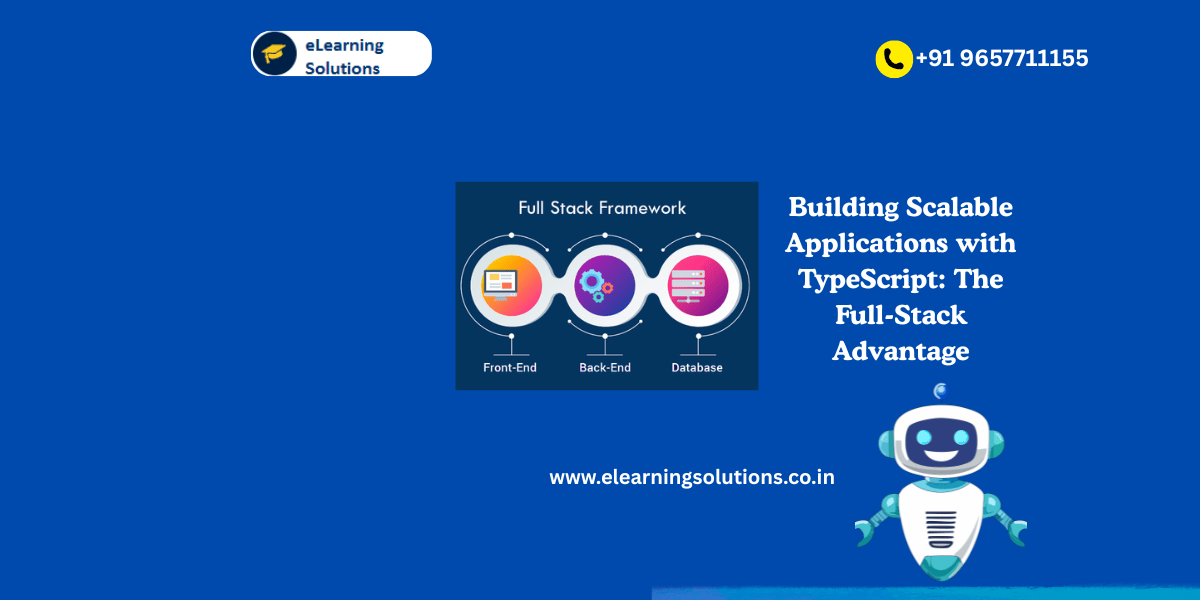
In today’s software development world, consistency and maintainability define success. As teams expand, projects grow, and architectures evolve, keeping the front-end and back-end in sync becomes increasingly challenging. This is where integrating TypeScript across the full-stack stands out as a powerful approach. TypeScript brings type safety, better tooling, and shared logic between client and server, helping developers build scalable and maintainable applications. Whether you’re a front-end engineer exploring Node.js or a full-stack developer looking to enhance your workflow, adopting TypeScript end-to-end can transform your development experience.
Why TypeScript Matters for Modern Development
JavaScript remains the universal language of the web, but its dynamic nature often introduces bugs that are only discovered at runtime. TypeScript, a superset of JavaScript, introduces static typing and modern tooling that catches errors during development, long before deployment. This small change creates huge benefits: improved productivity, fewer runtime errors, and better documentation through clear type definitions.
For organizations, this means faster onboarding for new developers, reduced maintenance costs, and more confidence in large-scale refactors. For developers, it means cleaner code and a smoother workflow — a win-win across the board.
The Case for Full-Stack TypeScript Integration
Many teams start using TypeScript on the front-end with frameworks like React, Angular, or Vue. However, the real power emerges when the same language and typing system extend to the back-end with Node.js, Express, or NestJS. Integrating TypeScript across the full-stack creates a unified ecosystem where both ends of the application speak the same language.
Imagine defining a data model once and sharing it across your API, front-end, and even your database layer. This eliminates inconsistencies and reduces repetitive code. For example, if your back-end defines a User type, your front-end automatically understands its structure without extra definitions. This tight integration ensures that when a model changes, both layers update instantly, keeping the system aligned.
How TypeScript Strengthens the Front-End
Front-end development is often dynamic, involving user interactions, real-time data updates, and API integrations. TypeScript helps by ensuring that every piece of data has a defined shape and behavior. This means fewer bugs caused by undefined properties or incorrect assumptions.
When integrated with frameworks like React, TypeScript brings intelligent autocompletion, prop validation, and early detection of invalid states. In Angular, it’s already a first-class citizen, and in Vue 3, it integrates seamlessly with the Composition API. These benefits lead to cleaner, more predictable components that scale well as the application grows.
Moreover, TypeScript enhances collaboration between developers. A well-typed codebase is like having built-in documentation — any developer can easily understand what each component expects and returns.
TypeScript’s Role in the Back-End
On the server side, TypeScript offers equally compelling benefits. Node.js applications written in JavaScript can often become hard to maintain due to the lack of type definitions, especially when dealing with large APIs or multiple microservices. By using TypeScript in frameworks like Express, NestJS, or Fastify, developers can define clear contracts for routes, services, and data models.
TypeScript enforces structure across the back-end, reducing common errors like passing the wrong data to controllers or mishandling asynchronous operations. In NestJS, for instance, decorators and type definitions work together to create self-documenting APIs, improving both readability and maintainability.
When both client and server share the same type definitions, API communication becomes seamless. This shared context drastically reduces integration issues, making debugging faster and deployments safer.
Real-World Example: Shared Types for Front-End and Back-End
Let’s consider a real-world scenario: a task management application. In a traditional setup, the Task interface might be separately defined on the front-end and back-end. If a developer changes a field name in the API, they must manually update the front-end code — and if they forget, it results in broken data handling.
In a full-stack TypeScript setup, both sides import the same Task type from a shared library. This ensures automatic synchronization between layers. If the field name changes, TypeScript immediately flags the mismatch during compilation, saving hours of debugging. This shared model approach is the backbone of maintainable full-stack systems.
Enhancing Developer Productivity and Collaboration
When teams use the same language across the stack, onboarding becomes faster, and code reviews become more effective. Developers can move between front-end and back-end tasks without learning new patterns or languages. This not only improves productivity but also fosters a deeper understanding of the overall system.
In addition, integrated TypeScript projects benefit from unified build tools, shared linters, and common libraries. Frameworks like Turborepo and NX make managing monorepos simpler, enabling teams to structure large projects efficiently. TypeScript plays a central role in keeping all these pieces cohesive and maintainable.
TypeScript and Full-Stack Frameworks: The Future Is Now
The rise of full-stack TypeScript frameworks like Next.js, Remix, and NestJS reflects a growing industry shift. These frameworks allow developers to use TypeScript seamlessly from front to back, simplifying development pipelines.
For instance, Next.js enables type-safe API routes alongside typed React components. This unified approach ensures that every part of your application benefits from TypeScript’s safety and tooling. NestJS, built entirely with TypeScript, brings enterprise-level patterns like dependency injection and modular architecture to the back-end, making large-scale projects more manageable.
As more companies move toward microservices and serverless architectures, having type-safe, shared contracts becomes even more critical. TypeScript’s robust type system ensures that changes in one service don’t unexpectedly break others — an essential capability in distributed systems.
Best Practices for Integrating TypeScript Across the Full-Stack
Start small by adding TypeScript incrementally. You can begin with type-checking critical files or introducing it to a single layer of your application. Once your team is comfortable, move toward shared type definitions and configuration consistency. Use a monorepo structure to store shared interfaces, utilities, and configuration files in one place.
Leverage TypeScript configuration files (tsconfig.json) to maintain consistent compiler settings across all projects. Integrate linters and formatters like ESLint and Prettier to enforce code standards. Finally, ensure that your build process supports TypeScript compilation in both client and server environments for a truly unified workflow.
Why Full-Stack TypeScript Is the Future of Maintainable Codebases
In a fast-moving development landscape, where speed and quality must coexist, TypeScript offers the perfect balance. By integrating TypeScript across the full-stack, teams achieve consistency, scalability, and long-term maintainability — three cornerstones of sustainable software engineering.
From improved type safety to enhanced collaboration, the benefits extend beyond code quality — they shape a more productive and confident developer experience. As more companies adopt cloud-native architectures and microservices, full-stack TypeScript will continue to be a defining trend in modern web development.
Now is the best time to embrace TypeScript not just as a language upgrade, but as a strategic advantage for building resilient, future-ready applications.
Ready to Master Full-Stack TypeScript?
If you’re excited to take your TypeScript skills to the next level, explore our in-depth guides, tutorials, and full-stack development courses available on our website. Learn how to design scalable architectures, share code across environments, and build production-grade applications with TypeScript at the core. Your journey toward more maintainable, efficient, and elegant code starts here.
you may be interested in this blog here:-
Advanced OOP Concepts in SAP ABAP A Comprehensive Guide
Salesforce Developer Salary in India An In-Depth Analysis
SAP MM Consultant resume 3 years experience
Integration cloud system to HANA Cloud Platform using Cloud Connector
Is Front-End Development in Demand?




 WhatsApp us