
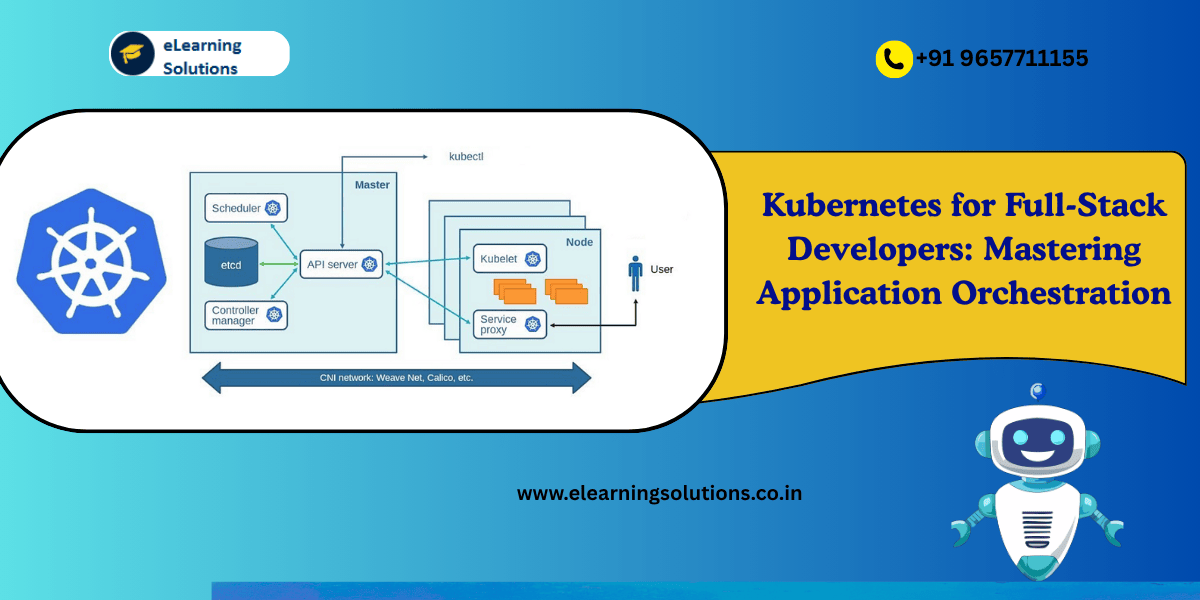
As the world of software development evolves toward automation and scalability, Kubernetes for full-stack developers has become more than just a technical curiosity—it’s a must-have skill. Modern applications run on microservices, containers, and distributed systems, and Kubernetes is the orchestrator that keeps them all running smoothly. For a full-stack developer, understanding Kubernetes unlocks new levels of efficiency and confidence in deploying, managing, and scaling applications across any environment.
The Evolution of Application Deployment
Not long ago, developers manually deployed code to servers, configured dependencies, and fought endless versioning conflicts. Then came virtual machines and containers, making it easier to isolate applications. Docker revolutionized this space, but managing multiple containers across environments quickly became complex. Enter Kubernetes—Google’s open-source solution that automates container orchestration, scaling, and deployment so developers can focus on building rather than babysitting infrastructure.
Why Full-Stack Developers Should Learn Kubernetes
For full-stack developers, Kubernetes bridges the gap between code and cloud infrastructure. You might already know how to build APIs, frontends, and databases—but deploying them efficiently at scale requires orchestration. Kubernetes automates this by handling container deployment, networking, load balancing, and self-healing. Imagine a world where your application automatically restarts when it fails, scales during high traffic, and rolls out updates without downtime. That’s the power of Kubernetes orchestration.
Understanding the Core Concepts of Kubernetes
At its core, Kubernetes works with a few essential components:
Pods: The smallest deployable units that contain one or more containers.
Nodes: The servers (physical or virtual) that run your application.
Clusters: Groups of nodes managed by Kubernetes to run your workloads.
Deployments: The configurations that describe how your application should run and scale.
Services: The networking layer that exposes your app internally or externally.
For full-stack developers, these concepts mean you can define your entire application structure using YAML files—everything from APIs and databases to front-end services—making your deployment reproducible and version-controlled.
Building a Full-Stack Application with Kubernetes
Let’s take a simple example: a React frontend, Node.js backend, and MongoDB database. With Kubernetes, each component runs in its own container and is deployed as a Pod. The backend communicates with the database through a Kubernetes Service, while the frontend accesses the backend via an external load balancer. This separation ensures that your app can scale each layer independently. When traffic spikes, Kubernetes automatically creates more backend pods; when it drops, it scales down to save resources.
Kubernetes in Action: Deployment and Scaling
When deploying applications, Kubernetes uses the Deployment Controller to ensure that the desired number of Pods are running. You define a YAML file specifying your Docker image, environment variables, and replicas. Kubernetes then handles the rest—rolling updates, rollbacks, and ensuring uptime. For example, when you push a new version of your app, Kubernetes gradually replaces old pods with new ones, monitoring health throughout the process. This means zero downtime deployments, a critical advantage for production systems.
Integrating Kubernetes with CI/CD Pipelines
In a full-stack environment, Kubernetes shines when integrated with CI/CD pipelines using tools like GitHub Actions, Jenkins, or GitLab CI. After every code push, your pipeline can build Docker images, run tests, and deploy automatically to a Kubernetes cluster. This continuous delivery process ensures faster releases, fewer errors, and a streamlined workflow for the entire team. Full-stack developers gain more control and visibility over the deployment lifecycle while reducing manual intervention.
Kubernetes vs. Traditional Hosting
Traditional hosting methods require managing individual servers, configuring load balancers, and handling downtime manually. Kubernetes eliminates these pain points by abstracting infrastructure management. It can run on any cloud platform—AWS, Azure, Google Cloud, or even on-premises—allowing full-stack teams to deploy consistently across environments. This portability also makes Kubernetes ideal for hybrid and multi-cloud strategies, where applications need to run seamlessly across different infrastructures.
Security and Observability in Kubernetes
Security and observability are critical parts of modern development, and Kubernetes provides both natively. Role-based access control (RBAC) ensures that only authorized users can make changes to the cluster. Secrets management allows sensitive data like API keys and credentials to stay encrypted. For observability, Kubernetes integrates with tools like Prometheus and Grafana to monitor resource usage, track performance, and visualize logs. This transparency helps developers detect and resolve issues before they impact users.
Real-World Applications of Kubernetes for Full-Stack Developers
Kubernetes powers everything from small startups to tech giants. Netflix, Shopify, and Airbnb all rely on it for deploying and scaling microservices. Full-stack developers can use Kubernetes for hosting websites, APIs, databases, or even AI workloads. For example, a SaaS startup could use Kubernetes to deploy separate environments for development, staging, and production—all managed automatically, ensuring faster iterations and higher reliability.
The Future of Kubernetes in Full-Stack Development
As technology continues to evolve, Kubernetes will remain at the heart of cloud-native development. With serverless Kubernetes (like AWS Fargate or Google Cloud Run), developers can focus purely on writing code while Kubernetes manages infrastructure behind the scenes. Additionally, the ecosystem is expanding with tools like Helm (for package management) and Istio (for service meshes), making it easier than ever for full-stack developers to adopt Kubernetes without deep DevOps expertise.
Taking Your First Steps with Kubernetes
Getting started with Kubernetes doesn’t have to be intimidating. Begin by containerizing your full-stack app with Docker, then deploy it on a local cluster using Minikube or Kind. Once you’re comfortable, explore cloud-managed Kubernetes services like Amazon EKS, Google GKE, or Azure AKS. Experiment with creating Pods, Services, and Deployments, and integrate them into your CI/CD pipelines. Each step will bring you closer to mastering orchestration and becoming a more capable full-stack developer.
Empower Your Development Journey
Learning Kubernetes for full-stack developers isn’t just about adopting new tools—it’s about embracing a mindset of automation, scalability, and resilience. As software systems grow in complexity, Kubernetes provides the control and flexibility needed to keep up. Whether you’re managing a small project or building enterprise-grade applications, Kubernetes helps you orchestrate your success.
Explore our advanced guides and online courses to deepen your understanding of cloud-native architecture, CI/CD automation, and Kubernetes-based development. Start your journey toward becoming a modern full-stack developer equipped for the future of scalable software delivery.
you may be interested in this blog here:-
Advanced OOP Concepts in SAP ABAP A Comprehensive Guide
Salesforce Developer Salary in India An In-Depth Analysis
SAP MM Consultant resume 3 years experience
Integration cloud system to HANA Cloud Platform using Cloud Connector
Is Front-End Development in Demand?




 WhatsApp us