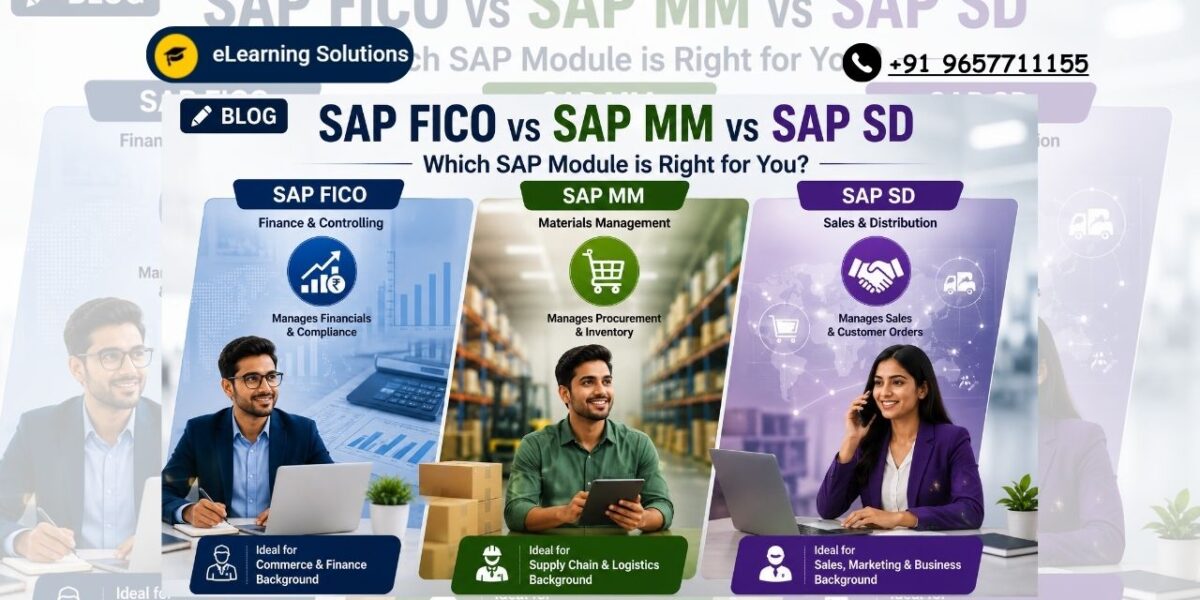
Choosing the right SAP module is one of the most critical decisions for anyone starting a career in enterprise technology, and the debate between SAP FICO, SAP MM, and SAP SD is the most common dilemma aspirants face. The short answer is that there is no single best module, but rather the best module for you based on your educational background, personal interests, and career aspirations. SAP FICO manages the money and financial compliance, SAP MM handles the procurement and flow of materials, and SAP SD drives the sales and revenue generation processes . This guide will break down each module in detail to help you make an informed decision that aligns with your unique profile.
The most important step is to understand what each of these three powerhouse modules actually does. SAP FICO, which stands for Financial Accounting and Controlling, is the undisputed financial backbone of any SAP implementation . It manages all financial transactions within an organization, including the general ledger, accounts payable, accounts receivable, asset accounting, and internal cost controlling. If you are a numbers person who loves structure, compliance, and analytical thinking, FICO is your natural habitat. It is a stable and high-demand module because every company, regardless of industry, must maintain accurate financial records to comply with legal and regulatory requirements . The role of a FICO consultant is to ensure that every financial transaction is recorded correctly and that the organization’s financial health is meticulously tracked.
SAP MM, or Materials Management, operates on a completely different plane. This module is the supply chain engine, responsible for the entire procurement cycle and inventory management . It handles everything from identifying a need for materials and sourcing vendors, to creating purchase orders, managing warehouse stock, and verifying invoices. If your interests lie in logistics, operations, and the tangible flow of goods through a business, MM is the module for you. The demand for MM consultants is exceptionally high in manufacturing, retail, and distribution industries where efficient procurement and inventory control are critical to profitability . A role in MM is deeply connected to the physical supply chain, requiring a practical understanding of how materials move from supplier to warehouse to production floor.
SAP SD, or Sales and Distribution, completes this powerful trio by managing the customer-facing side of the business. This module focuses on the entire order-to-cash cycle, from receiving customer inquiries and processing sales orders, to shipping products and generating invoices . SD is all about revenue generation and customer experience, making it a dynamic and fast-paced specialization. If you are a people person who enjoys sales, marketing, and customer interaction, and you have an MBA in marketing or business administration, SD is a fantastic choice. SD consultants configure complex pricing procedures, manage discounts, and optimize shipping logistics, directly impacting the company’s bottom line .
The decision between these three modules should be driven by your educational background and what you naturally enjoy. For commerce, finance, or accounting graduates, SAP FICO is the most logical and straightforward path because the concepts of debits, credits, and financial reporting will already be familiar to you . Your existing knowledge will allow you to transition more smoothly into SAP configuration and focus on learning the system rather than the business rules. For those with a background in supply chain, logistics, or industrial engineering, SAP MM is a perfect fit . You already understand how factories operate and how materials flow through a supply chain, making the transition to configuring MM processes a natural progression. For individuals with a marketing, sales, or business administration background, SAP SD aligns beautifully with your understanding of customer psychology, distribution channels, and pricing strategies .
Beyond your educational background, consider the typical work environment for each module. FICO consultants often work in quiet, structured environments dealing with auditors and strict financial deadlines, requiring a high attention to detail and tolerance for spreadsheets . MM consultants frequently split their time between a desk and the warehouse floor, especially during implementation projects, requiring a practical, hands-on approach . SD consultants spend significant time in meeting rooms with sales and marketing teams, translating promotional ideas into system configurations . Your ideal work style should guide your choice as much as your qualifications.
The long-term career growth and earning potential for all three modules are excellent, though they differ slightly. Experienced FICO consultants often command the highest hourly rates in the freelance market and have the most unrestricted access to international job markets because financial compliance is a universal need . However, all three modules offer clear paths to becoming a project manager, solution architect, or delivery lead. Senior professionals in any of these modules can earn from ₹18 LPA to ₹35+ LPA or more in India, with global opportunities in the current S/4HANA migration wave driving demand even higher for FICO, MM, and SD specialists . The market is booming, with over 200 active SAP MM roles listed in Germany alone, and global companies are racing to migrate to S/4HANA, creating a surge in demand for skilled functional consultants .
In conclusion, the right course for you is the one that best matches your foundation and interests. If you love finance and accounting, choose FICO. If you are passionate about supply chains and procurement, choose MM. If you thrive in customer-facing sales environments, choose SD. All three are exceptional career choices with high demand, strong salaries, and global opportunities in 2026 and beyond. The key is to align your choice with your strengths to ensure a successful and fulfilling career. As the SAP landscape continues to evolve with S/4HANA and cloud technologies, these core modules remain the foundation of enterprise business, and mastering one of them is your gateway to a rewarding future.
YOU MAY BE INTERESTED IN
How to Convert JSON Data Structure to ABAP Structure without ABAP Code or SE11?
ABAP Evolution: From Monolithic Masterpiece




 WhatsApp us