
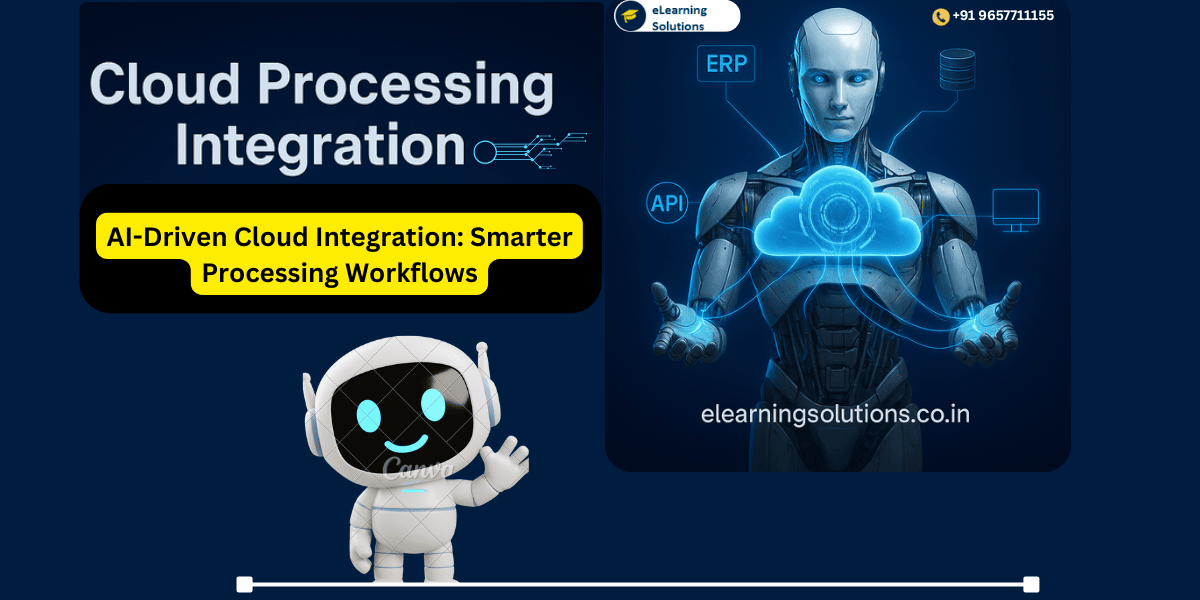
The business world is generating more data than ever before. From online shopping carts to financial transactions, healthcare records, and even IoT devices in smart homes, billions of data points flow across platforms every day. Managing this massive information stream is no small task—and that’s where cloud integration comes in.
Now imagine making cloud integration not just faster, but smarter. That’s the promise of AI-driven cloud integration, a game-changing approach that uses artificial intelligence to automate processes, reduce errors, and unlock insights in real time.
In this blog, we’ll explore what AI-driven cloud integration means, why it matters, the challenges it solves, and how you can start leveraging it in your workflows. Whether you’re a beginner curious about the future of tech or an employee eager to upskill, this guide will give you the tools to understand and act.
What is AI-Driven Cloud Integration?
At its core, cloud integration is about connecting multiple applications, platforms, and data sources so they can work together seamlessly. Traditionally, this process required lots of manual setup, custom code, and ongoing maintenance.
AI-driven cloud integration changes the game by adding intelligence:
- Automation: AI can automatically map data fields, detect anomalies, and adjust workflows.
- Prediction: Machine learning models forecast issues before they occur.
- Optimization: AI continuously improves workflows for speed and cost-efficiency.
💡 Analogy: Imagine traditional cloud integration as driving a car with a paper map. AI-driven integration is like driving with a GPS that not only gives directions but also predicts traffic jams, reroutes you instantly, and even suggests the best time to refuel.
Why AI in Cloud Integration Matters Today
AI and cloud computing are two of the fastest-growing technologies. When combined, they address pressing business challenges:
- Data Overload: Companies are drowning in data from apps, devices, and customers. AI helps sort, clean, and organize it automatically.
- Manual Errors: Human mistakes in mapping data or configuring workflows can cause costly downtime. AI reduces these risks.
- Rising Costs: Inefficient integration processes can burn through budgets. AI optimizes resources, cutting unnecessary expenses.
- Customer Expectations: Customers expect real-time services (instant payments, live tracking, personalized recommendations). AI integration makes this possible.
💡 Example: A global e-commerce platform uses AI-driven cloud integration to sync inventory, logistics, and payment systems in real time. The result? Faster deliveries, fewer stockouts, and happier customers.
Key Benefits of AI-Driven Cloud Integration
1. Smarter Workflows
AI can recognize patterns in data flows and adjust automatically, ensuring workflows run smoothly without constant human supervision.
2. Reduced Latency
AI tools can identify bottlenecks in data pipelines and reroute processes to keep everything running at top speed.
3. Cost Optimization
By predicting demand and automating resource allocation, AI helps businesses avoid overspending on cloud infrastructure.
4. Enhanced Security
AI systems monitor for unusual activity, flagging potential breaches before they escalate.
5. Better Decision-Making
AI not only moves data but also interprets it, providing actionable insights directly within cloud dashboards.
Real-World Applications
- Finance: AI-driven integration enables fraud detection by analyzing transactions across platforms in real time.
- Healthcare: Patient records from multiple systems are integrated securely, with AI ensuring data accuracy and compliance.
- Retail: AI connects sales, marketing, and logistics data to predict demand and personalize customer offers.
- Manufacturing: IoT devices feed data into AI-powered cloud platforms that predict equipment failures before they happen.
💡 Relatable takeaway: Every time you get a personalized shopping recommendation or real-time order update, AI-driven cloud integration is working behind the scenes.
Challenges of AI-Driven Cloud Integration
While powerful, this technology comes with challenges beginners should understand:
- Complexity: AI systems require careful setup and monitoring.
- Cost of Adoption: Advanced AI tools can be expensive upfront, though they often save money long-term.
- Data Privacy: AI models require large amounts of data, raising questions about storage, compliance, and ethics.
- Skill Gaps: Many businesses lack staff trained in both AI and cloud technologies.
Practical Tips for Beginners
- Start Small: Experiment with AI-powered integration in a single workflow (e.g., automating customer support ticket routing).
- Use Pre-Built Tools: Platforms like AWS AI Services, Google Cloud AI, and Azure Cognitive Services offer plug-and-play AI features.
- Prioritize Security: Always combine AI with strong encryption and access controls.
- Track ROI: Measure improvements in speed, cost, or error reduction to justify scaling AI further.
- Upskill Continuously: Take beginner-friendly courses in cloud computing and AI integration.
Industry Insights and Market Trends
- The global AI-in-cloud market is expected to surpass $250 billion by 2030.
- According to Deloitte, companies that integrate AI with cloud see 30–50% faster process automation.
- AI-driven workflows are becoming a standard in sectors like fintech, logistics, and healthcare.
What this means for you: Whether you’re a student, professional, or business leader, now is the perfect time to explore AI-driven cloud integration. The earlier you learn, the more valuable your skills become.
Future of AI-Driven Cloud Integration
- Hyper-Automation: Entire business processes will run on AI-managed cloud platforms.
- Self-Healing Systems: Cloud workflows will detect and fix their own issues without human intervention.
- AI + Edge Computing: Data will be processed closer to where it’s generated (e.g., IoT devices), improving speed and security.
- Regulatory Frameworks: Expect stricter compliance laws around AI-driven data handling.
Conclusion: Smarter Workflows, Stronger Growth
AI-driven cloud integration isn’t just about technology—it’s about working smarter, not harder. By combining the power of AI with the scalability of cloud systems, businesses can cut costs, speed up operations, and deliver better experiences to customers.
For beginners, the key is to start small, experiment, and keep learning. AI-driven integration will soon be a standard expectation in every industry. By acting now, you position yourself—or your company—at the forefront of innovation.
Your next step? Explore our in-depth learning resources and hands-on courses on AI and cloud integration. Gain practical skills that will future-proof your career or business.
👉 [https://www.elearningsolutions.co.in/]
YOU MAY BE INTERESTED IN
ABAP Evolution: From Monolithic Masterpieces to Agile Architects
A to Z of OLE Excel in ABAP 7.4
Find Your Preferred Courses
SAP SD S4 HANA

SAP HR HCM

Salesforce Administrator Training
Salesforce Developer Training

SAP EWM
Oracle PL-SQL Training Program
Pega Training Courses in Pune- Get Certified Now
SAP PP (Production Planning) Training Institute


 WhatsApp us