In today’s digital world, software rarely works alone. From mobile apps and cloud platforms to enterprise ERP systems, everything needs to communicate seamlessly. This is where API Integration Mastery becomes a critical skill for developers, IT professionals, and even business teams.
Whether you’re a beginner learning system integration or an employee working with multiple platforms, understanding REST, GraphQL, and gRPC will help you build faster, smarter, and more scalable applications.
Let’s break it all down in a simple, practical, and beginner-friendly way.
What Is API Integration?
API integration is the process of connecting different software systems so they can exchange data and perform actions automatically.
For example:
• A mobile app fetching user data from a backend server
• An e-commerce website connecting to a payment gateway
• An ERP system sharing data with CRM software
APIs act as messengers that allow systems to talk to each other securely and efficiently.
Why API Integration Mastery Matters Today
Modern businesses depend heavily on connected systems. Without proper API integration:
• Data becomes siloed
• Processes slow down
• User experience suffers
With strong API integration:
• Systems scale easily
• Automation improves efficiency
• Applications become future-ready
This is why API Integration Mastery is one of the most in-demand skills in 2026.
Understanding REST APIs
REST (Representational State Transfer) is the most widely used API architecture today.
REST APIs work using standard HTTP methods like:
• GET – fetch data
• POST – create data
• PUT – update data
• DELETE – remove data
They typically exchange data in JSON format, making them simple and readable.
Real-World REST API Example
Imagine a food delivery app:
• The app sends a GET request to fetch restaurants
• A POST request places an order
• A PUT request updates delivery status
REST APIs are easy to understand, widely supported, and perfect for most web and mobile applications.
Strengths and Limitations of REST
Strengths:
• Simple and beginner-friendly
• Works well with web technologies
• Huge community support
Limitations:
• Over-fetching or under-fetching data
• Multiple API calls for complex data
• Performance issues at scale
These challenges led to the rise of GraphQL.
What Is GraphQL?
GraphQL is a modern API query language developed by Facebook.
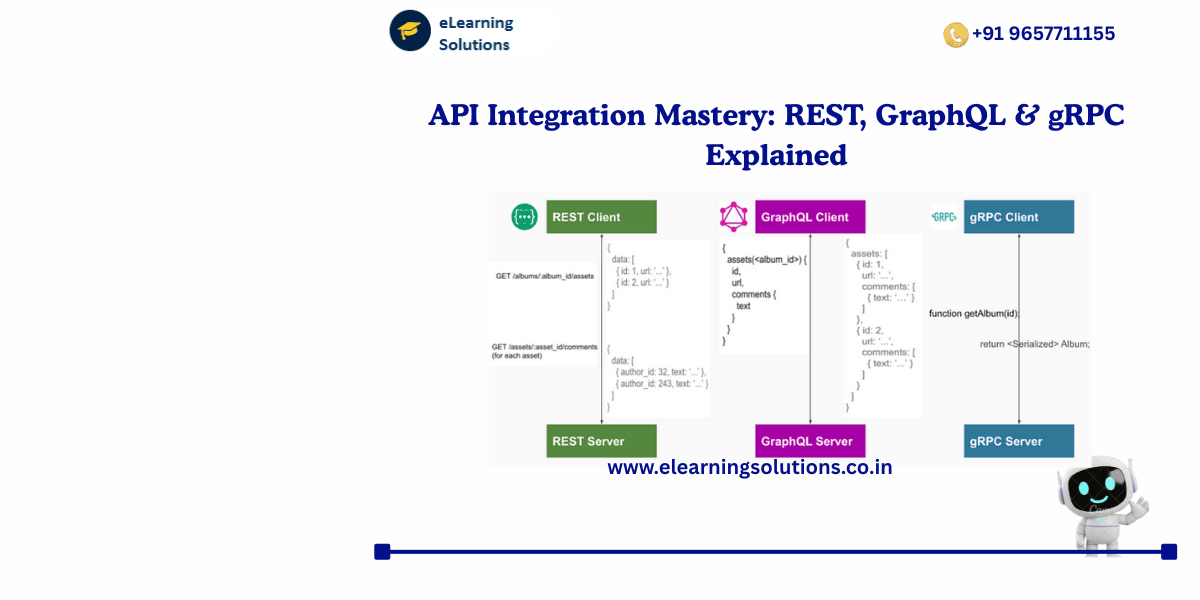
Instead of fixed endpoints, GraphQL allows clients to request exactly the data they need in a single call.
This makes API integration more efficient and flexible.
GraphQL Explained with an Example
In a social media app:
• REST may require separate calls for user info, posts, and comments
• GraphQL fetches everything in one request
This reduces network usage and improves performance, especially for mobile apps.
When to Use GraphQL
GraphQL is ideal when:
• Frontend requirements change frequently
• Applications need flexible data queries
• Bandwidth optimization is critical
However, GraphQL requires careful design and security handling.
Introducing gRPC
gRPC is a high-performance, open-source RPC (Remote Procedure Call) framework developed by Google.
Unlike REST and GraphQL:
• gRPC uses binary data instead of JSON
• It relies on Protocol Buffers
• Communication is extremely fast
gRPC is designed for microservices and real-time systems.
gRPC in Real-World Use Cases
Companies use gRPC for:
• High-frequency trading systems
• Real-time analytics
• Microservices communication
For example, streaming services use gRPC for fast internal data exchange between services.
Comparing REST, GraphQL, and gRPC
REST:
• Best for public APIs
• Easy to learn
• Human-readable
GraphQL:
• Best for frontend-heavy apps
• Flexible queries
• Efficient data usage
gRPC:
• Best for internal systems
• High performance
• Strongly typed contracts
API Integration Mastery means knowing which tool to use and when.
Security in API Integration
Security is a critical part of API integration.
Common practices include:
• OAuth 2.0
• API keys
• JWT tokens
• HTTPS encryption
Understanding security fundamentals ensures safe data exchange across systems.
API Integration in Enterprise Systems
Large organizations use APIs to connect:
• ERP systems
• CRM platforms
• Cloud services
• Mobile and web apps
Mastering APIs helps businesses achieve automation, scalability, and digital transformation.
Industry Trends in API Integration
Current trends shaping API Integration Mastery include:
• API-first development
• Microservices architecture
• Event-driven APIs
• AI-powered integrations
Companies now treat APIs as products, not just technical tools.
How Beginners Should Learn API Integration Mastery
For beginners, the learning path should be:
• Start with REST fundamentals
• Practice API testing using tools like Postman
• Explore GraphQL queries
• Understand gRPC basics
Hands-on practice with real-world scenarios builds confidence quickly.
Career Opportunities with API Skills
Professionals skilled in API Integration Mastery can work as:
• Backend developers
• Integration specialists
• Cloud engineers
• Solution architects
API knowledge is valuable across industries and roles.
Conclusion: Master APIs, Master Modern Software
APIs are the backbone of modern software systems. Whether you’re building a simple app or managing enterprise platforms, understanding REST, GraphQL, and gRPC is essential.
API Integration Mastery empowers you to create scalable, secure, and future-ready systems that businesses depend on.
Call to Action
Ready to master API integration? Explore hands-on API courses, real-world projects, and step-by-step guides to build strong REST, GraphQL, and gRPC skills and advance your tech career.
you may be interested in this blog here:-
Advanced OOP Concepts in SAP ABAP A Comprehensive Guide
Salesforce Developer Salary in India An In-Depth Analysis
SAP MM Consultant resume 3 years experience
What is Salesforce Sustainability Cloud?




 WhatsApp us