


What is SAP ECC and S4 HANA?
SAP ECC to SAP S4 HANA migration necessitates migrating current configuration, transactional, and master data to the new SAP S/4HANA environment. It’s critical to migrate data entirely, on schedule, and accurately, and in a regulated manner. However, it might be difficult, and questions must be answered. ECC to S4 HANA migration. Consider the following scenario: Are there enough controls in place to ensure that the migration is proper and thorough, and that you can confirm it later?
The following unique issues were discovered during our recent engagement with SAP S4 HANA migrations:
- Migration of business partners that is incorrect or incomplete (customer and vendors)
- Figures from the old and new G/L accounts are incompatible.
- The stock totals for each material don’t add up.
This article is intended to serve as a reference for SAP review professionals who are involved in risk management and control activities prior to, during, and after the conversion of SAP ECC systems to SAP S/4HANA. We’ll give you an overview of the most important SAP S/4HANA improvements that have an influence on financial controls, as well as our best practises for pre- and post-migration control activities. ECC to S4 HANA migration.
Please note that this tutorial is intended for migrations from SAP ECC to SAP S4 HANA migration utilising the Brownfield technique (rather than the Greenfield approach), which implies that existing SAP ECC data and SAP ECC installations are moved to SAP S/4HANA.
While performing the audit/controls task, we wish to stress the relevance of the following control activities:
- The (pre) conversion control actions in SAP ECC that should be completed prior to migration
- After going live, the (after) migration control actions in SAP S/4HANA
- The migration control actions’ timeliness and documentation
This page includes the expected control actions as well as our recommendations. These are based on our practical experience and should be verified by the responsible individuals in the migration – and controls/audit team during the project’s design, testing, execution, and handover/closure. Please keep in mind that this material only applies to SAP S/4HANA versions 1809 and above. Also, keep in mind that this article does not cover the whole migration process; instead, it focuses on data migration controls.
Main Finance Relevant Functionality Changes in SAP S/4HANA
In comparison to SAP ECC, SAP S/4HANA features a number of significant enhancements that are also relevant to controls and audit specialists. The following innovations in SAP S/4HANA are financially relevant:
- Universal Ledger is a Financial Ledger that combines numerous components into one (including non-leading Ledgers, Revenue Recognition, Asset Accounting & Controlling). Because the underlying configuration, total tables, and transactional tables have been modified, this has an influence on controls.
- Up to ten parallel currencies per ledger are supported by the Universal Ledger. All currency kinds may be converted in real-time. Because exchange rates are determined differently, this has a control effect.
- Financial Supply Chain Credit Management replaces SD Credit Management and allows for the integration of external credit information, scoring/categorizing consumers, credit cases, and credit decision-making. Because the whole operation of Credit Management and the underlying control reports are different, this has an influence on controls.
- The required Material Ledger replaces stock valuation, allowing for multi-currency valuation, flexible valuation methodologies, and a streamlined data schema. Because the whole functioning of stock values/totals and the underlying control reports are different, this has an influence on controls.
- SD Revenue Recognition has been replaced by SAP S/4HANA Revenue Accounting, which allows for interaction with the Universal Ledger. This has a control impact since revenue accounting’s whole posting logic and functionality, as well as the underlying control reports, are different.
- Customers and vendors are replaced with business partners, allowing for a single location to handle all types of company partners, including workers, contacts, and legal owners. Because all of the old transactions for generating and updating customers and vendors are different, this has an impact on controls.
In the next sections of this post, we’ll go through how this new feature affects the control actions that must be performed during the SAP ECC to SAP S4 HANA migration.
Main Changes in Control-Relevant Tables
The feature modifications have an impact on existing ECC tables, as demonstrated in the diagram below. Some of the tables have been upgraded. Others have been changed in some way. Table modifications important to internal control with a financial impact are included in the summary below. The execution of controls and controls-related data analysis are both influenced by the changes in the underlying tables. ECC to S4 HANA migration.
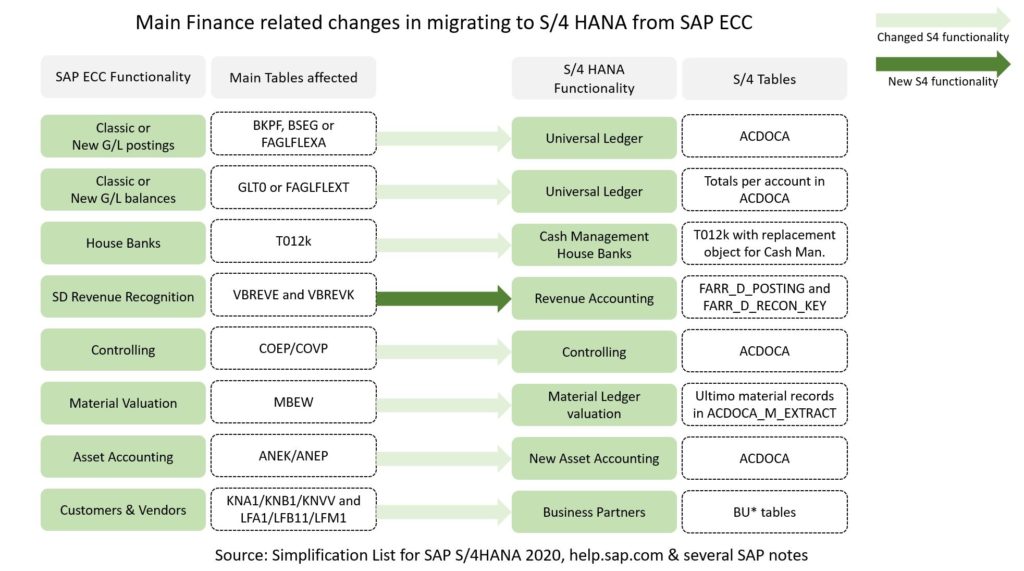
These changes in the underlying SAP S/4HANA data model impacts several aspects of control related work including:
- Data Analysis (for example, Manual Journal reviews due to S/4 Universal Ledger)
- Configuration controls (for example, Credit Management settings due to FSCM Credit Management)
- Financial controls (for example, Revenue Recognition reviews due to S/4 Revenue Accounting)
SAP ECC to HANA migration step by step
The SAP Software Update Manager (SUM) is offered for technical conversion while moving from SAP ECC to SAP S4 HANA. SAP S/4HANA will have to transform SAP ECC data into the SAP S/4HANA new data models using SUM due to the data model changes. There are many pre- and post-conversion tests in SUM that are linked to the feature changes shown in the graphic above (previous paragraph). Organizations can also employ the SAP Readiness Check, which includes a reconciliation analysis that detects errors in the General Ledger data, in addition to SUM.
We advise conducting additional tests in addition to SAP SUM and the SAP Readiness check, which are shown in the tables below. Executing and documenting these extra control actions will provide you more assurance to internal and external stakeholders/auditors. ECC to S4 HANA Migration.
We’ll show you how to do numerous best practise pre- and post-conversion tests in your current SAP ECC or SAP S/4HANA system. In the event that you desire more extensive information, we will also supply some recommended SAP notes to peruse.
ECC to S4 HANA conversion steps
See the tables below:
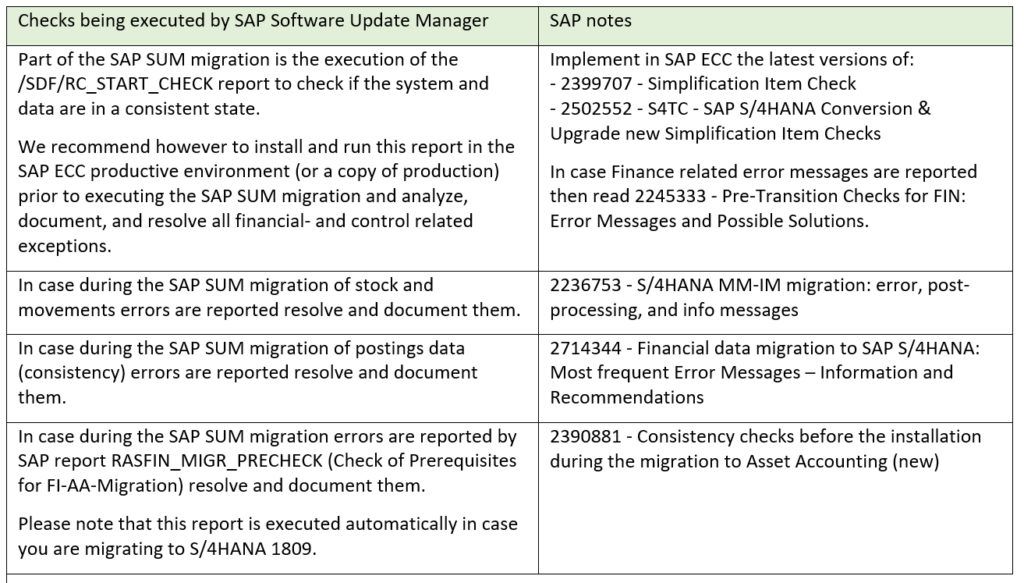
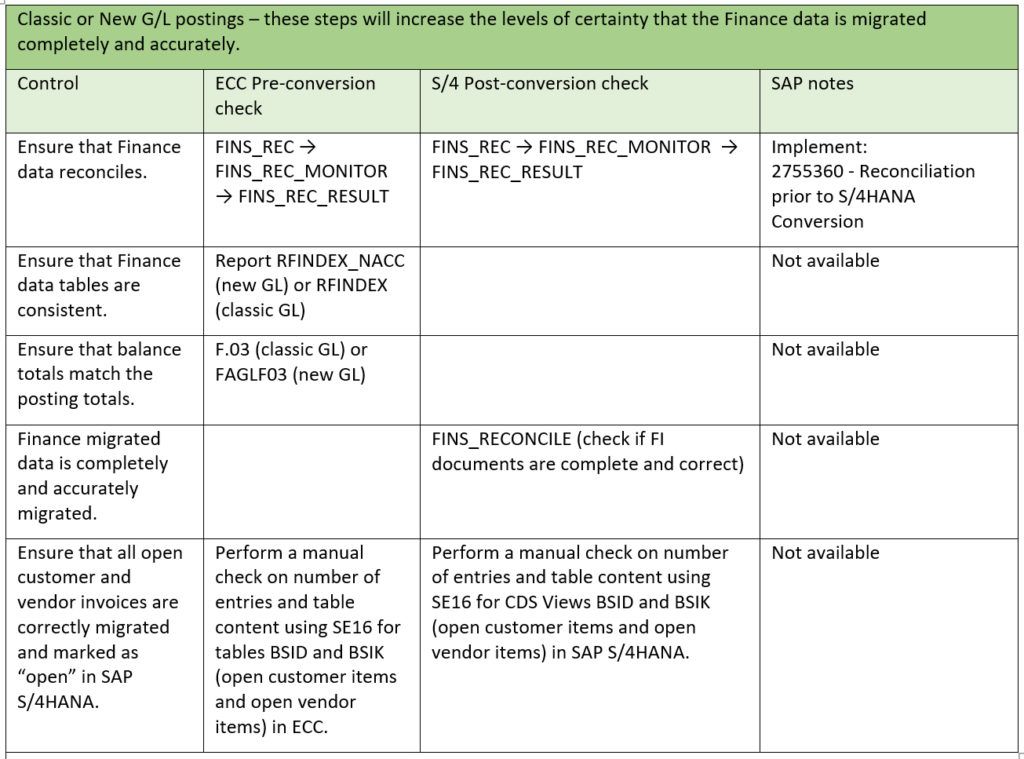
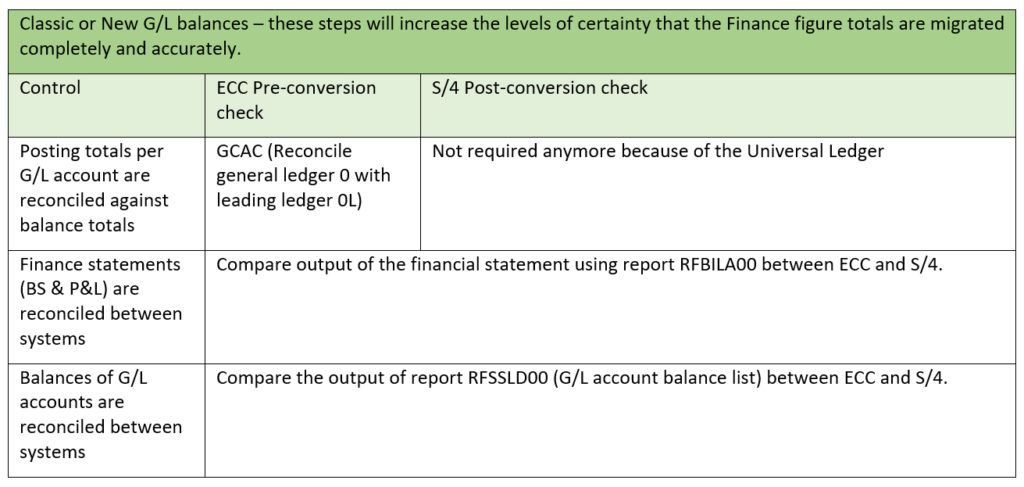
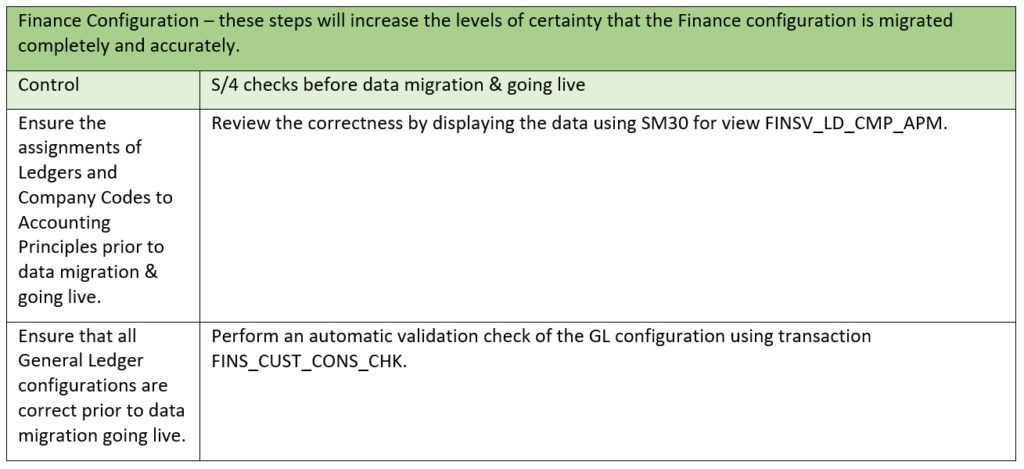
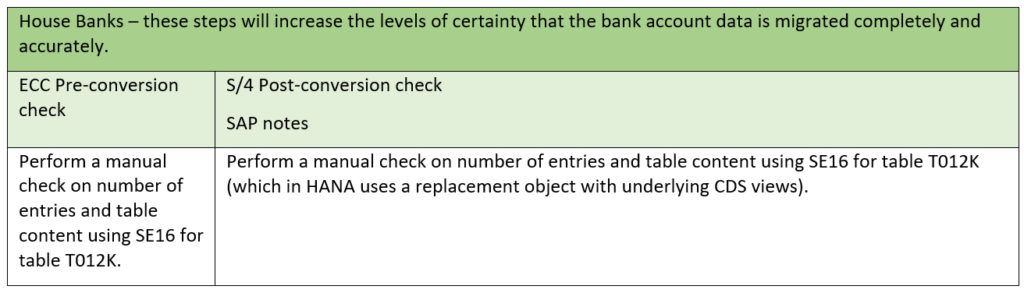
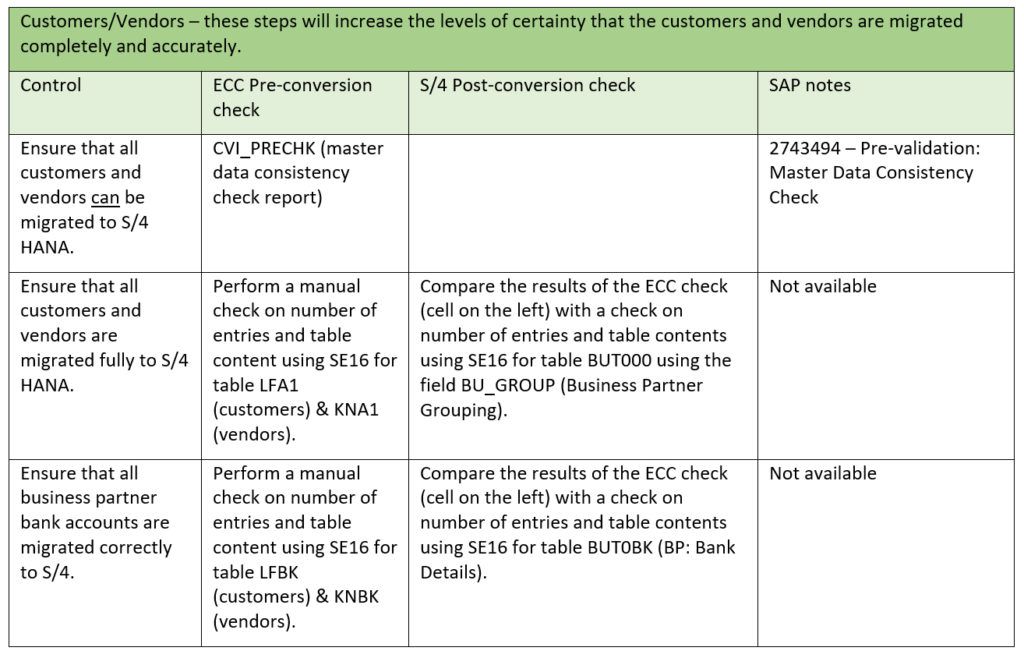
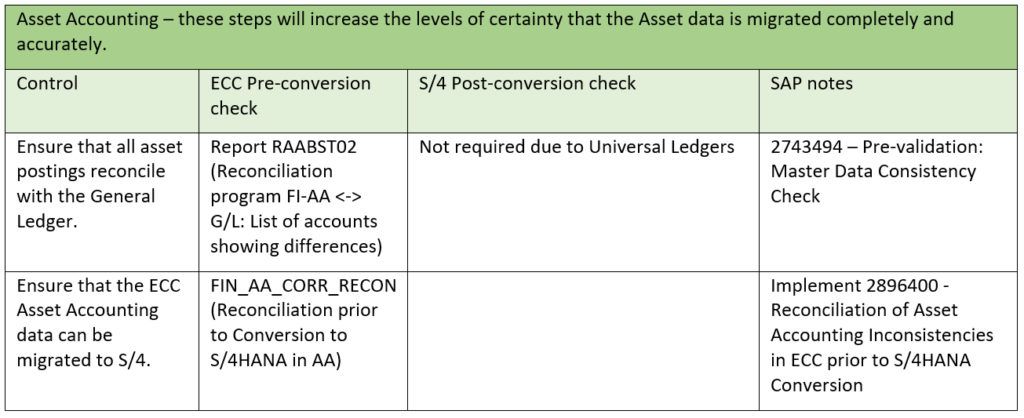
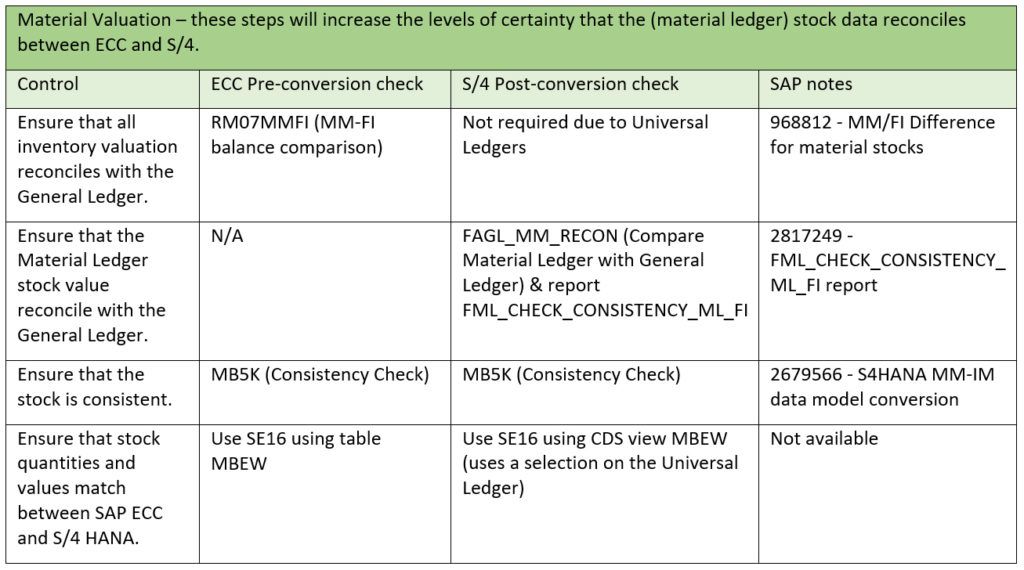
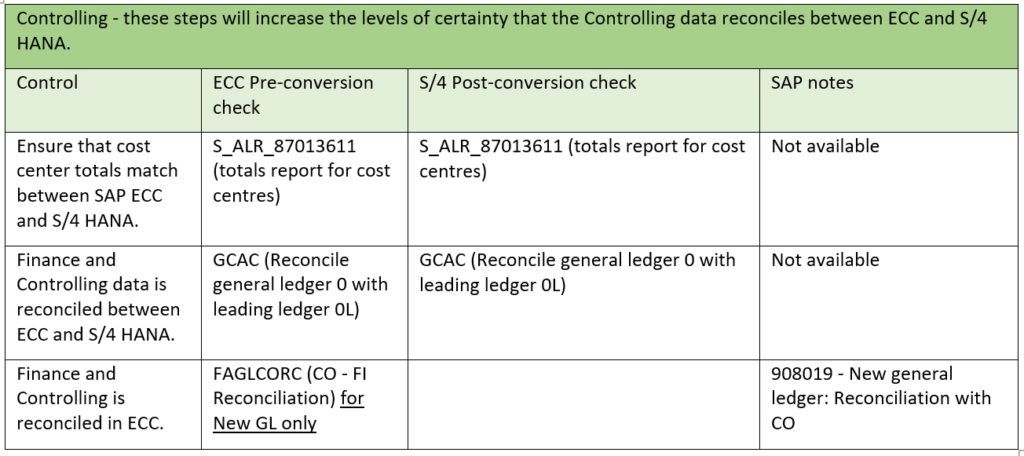
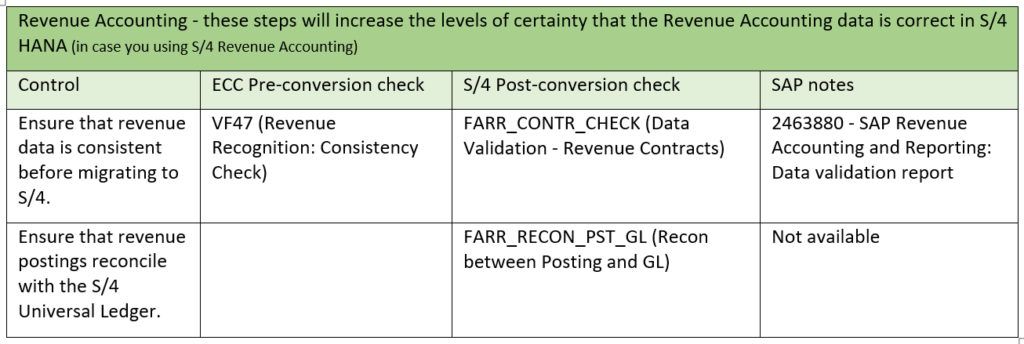
All exceptions identified in SAP Software Update Manager (SUM) as well as the controls measures you chose from this best practise article should be clearly documented. Please keep in mind that completing the SAP S/4HANA data conversion is not just a technical duty. Data migration has significant functional and financial repercussions that must be addressed during the transfer process.
These are Different Modules in SAP, Most used modules are as below:-
- SAP ABAP: ABAP stands for Advanced Business Application Programming. SAP ABAP is a high-level programming language.
- SAP MM: Stands for Materials management
- SAP SD: Stands for Sales & distribution
- SAP FICO: Financial Accounting and controlling
- SAP HR: Stands for Human Resource Management
- SAP EWM: Known as Extended, Warehouse Management
- SAP PP: Stands for Production planning & control
Along with these courses, we provide SAP HANA, and salesforce training also. To know more about courses and fees visit Click here.
Interested in SAP Courses? Fill Your Details Here
Error: Contact form not found.


 WhatsApp us