
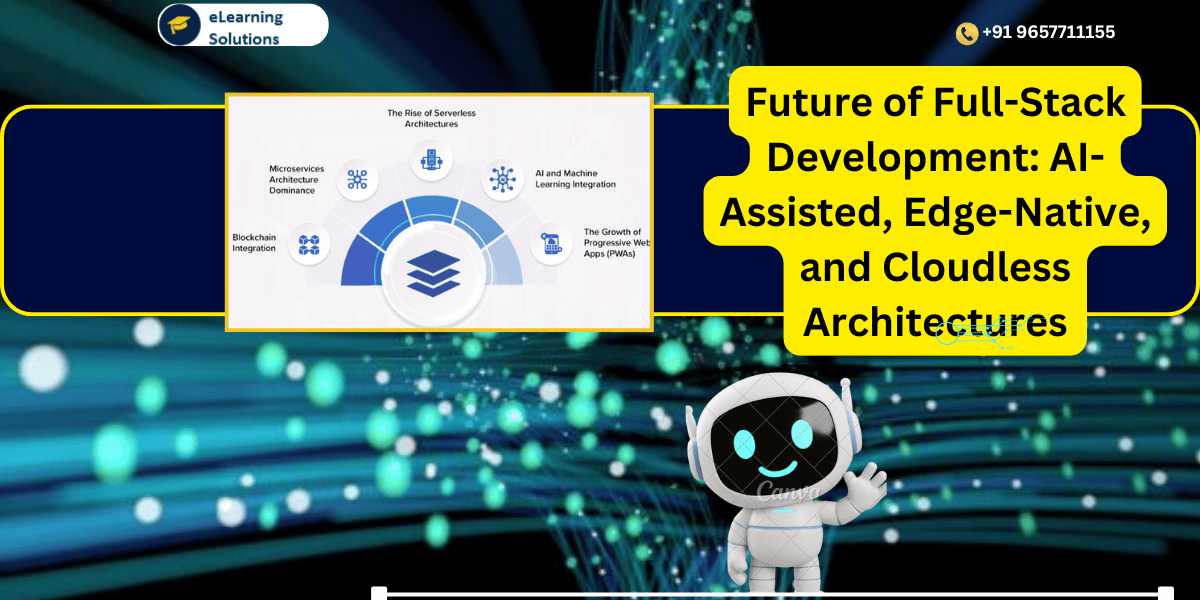
Full-stack development has evolved dramatically over the last decade. From basic server-rendered web apps to complex microservices, cloud-native systems, and globally distributed architectures, the role of a full-stack developer has changed far beyond writing frontend and backend code. But today, a new wave of transformation is emerging. The future of full-stack development is being shaped by three major innovations: AI-assisted engineering, edge-native applications, and cloudless architectures.
For beginners, students, and even experienced company teams, understanding these trends is essential. The next generation of software will be built faster, deployed closer to users, and optimized using intelligent automation. This blog explains each of these future-driven concepts in a simple, engaging, and practical way—complete with real-world examples and insights.
The Evolution: How Full-Stack Development Reached This Turning Point
Before exploring the technologies shaping tomorrow, it’s important to understand how full-stack development has changed over time.
Originally, full-stack developers worked mostly within a single ecosystem—HTML, CSS, JavaScript, and simple server-side logic. Then came:
- SPAs (React, Angular, Vue)
- Microservices
- Containerization with Docker
- Serverless functions
- DevOps and CI/CD pipelines
- Cloud-native architectures
Each shift increased complexity, but also expanded what full-stack developers could achieve. Today, the expectations are higher than ever: real-time apps, global performance, intelligent automation, multi-device journeys, and security by default.
This rapid evolution created the foundation for the future: AI-assisted, edge-native, and cloudless full-stack engineering.
AI-Assisted Full-Stack Development
AI is redefining how software is planned, written, tested, deployed, and monitored. What once took days or weeks now happens in minutes with the help of AI-powered tools.
What is AI-Assisted Development?
AI-assisted development uses intelligent tools and automation systems to help developers:
- Generate boilerplate code
- Suggest improvements
- Optimize performance
- Detect bugs before deployment
- Automate documentation
- Reduce repetitive tasks
- Speed up testing and debugging
Artificial intelligence is becoming a smart “co-developer” working alongside engineering teams.
Real-World Examples
- GitHub Copilot suggests full functions and patterns.
- AI code reviewers detect architectural issues early.
- Automated testing bots simulate user flows.
- AI monitoring systems predict system failures.
Some companies even rely on AI to generate UI components, APIs, and database models.
Why AI Matters for Future Full-Stack Development
AI doesn’t replace developers—it amplifies them.
It helps developers focus on creativity, architecture, security, and real problem-solving while the AI handles repetitive coding tasks.
In the coming years, full-stack developers will spend more time:
- Designing system flows
- Orchestrating micro-apps
- Integrating AI agents
- Managing intelligent pipelines
AI will transition from a helper to an essential component of modern development.
Edge-Native Full-Stack Applications
The next major shift in the future of full-stack development is edge-native applications.
What Is Edge-Native Development?
Edge-native development involves deploying applications across globally distributed servers that are physically close to users. Instead of hosting everything centrally in the cloud, edge systems run code on the nearest node to improve:
- Speed
- Reliability
- Latency
- Security
This creates experiences that feel instant—no matter where users are.
Real-World Examples
- Netflix uses edge systems for ultra-fast video delivery.
- E-commerce sites deploy edge functions to show personalized content instantly.
- IoT applications process data at the edge for safety-critical systems.
Frameworks like Next.js, Remix, Qwik, Cloudflare Workers, and Deno Deploy are pushing this revolution.
Why Edge-Native Systems Matter
Modern users expect experiences like:
- Instant loading
- Minimal buffering
- Real-time updates
- Secure transactions
Edge-native apps make this possible.
For full-stack developers, this means learning:
- Distributed computing concepts
- Serverless edge functions
- Global data replication
- Region-based deployments
In the future, apps will be born on the edge, not in a centralized cloud.
Cloudless Architectures: A New Twist in Deployment
The most surprising trend influencing the future of full-stack development is cloudless architecture.
What Is Cloudless Development?
Cloudless does not mean “no cloud.” Instead, it means:
- No complex cloud configuration
- No Kubernetes setup
- No infrastructure management
- No heavyweight cloud services
Instead, developers deploy code to distributed platforms that manage everything automatically—similar to serverless, but more autonomous.
Examples of Cloudless Platforms
- Cloudflare Workers
- Supabase Edge
- Netlify
- Vercel
- Deno Deploy
- Bun’s distributed runtime
These systems allow developers to deploy apps with a single command, while the platform:
- Scales automatically
- Handles load balancing
- Manages security
- Optimizes performance
This approach drastically simplifies DevOps.
Why Cloudless Architectures Matter
Cloud complexity is one of the biggest blockers for new developers and growing companies. Cloudless platforms eliminate infrastructure friction so developers can focus on:
- Code
- Features
- User experience
- Business logic
The future full-stack developer will spend far less time managing servers and far more time building meaningful products.
How These Three Trends Work Together
While AI-assisted, edge-native, and cloudless architectures are distinct concepts, they merge to create a powerful development future.
Here’s how they complement each other:
- AI accelerates development
- Edge-native infrastructure accelerates performance
- Cloudless systems accelerate deployment
Combined, they create the fastest, smartest, and most scalable development pipeline in history.
This is the new era of full-stack development.
Skills Future Full-Stack Developers Need
To stay relevant, upcoming developers should master:
- Modern JavaScript frameworks (Next.js, Svelte, React)
- Distributed databases (Fauna, Supabase, DynamoDB)
- Edge functions (Cloudflare Workers, Vercel Edge)
- AI tools (Copilot, test automation, AI monitors)
- API-first development
- DevOps fundamentals (CI/CD, GitOps)
- Micro frontends and microservices
The future developer is not defined by tools but by adaptability, architecture skills, and an automation-first mindset.
Practical Use Cases and Industry Adoption
These technologies are already shaping major industries:
- E-commerce: Edge-personalized product listings
- Fintech: Ultra-low-latency fraud detection at the edge
- Healthcare: AI-assisted diagnostics and automated workflows
- Social platforms: Instant global updates with distributed systems
- EdTech: Cloudless deployment for cost-effective scaling
More businesses are adopting these models because they reduce costs and dramatically improve performance.
Conclusion: A New Era for Full-Stack Development Begins Now
The future of full-stack development is clear:
AI-assisted creation, edge-native deployment, and cloudless architecture will define how apps are built.
Full-stack developers who embrace these technologies will lead the next wave of digital innovation. Whether you’re a beginner or an experienced engineer, now is the best time to upgrade your skills and adopt these future-driven technologies.
Call-to-Action (CTA)
Want to master full-stack development with AI, edge computing, and cloudless platforms?
Explore our tutorials, hands-on guides, and advanced courses to start your next-generation developer journey today.
you may be interested in this blog here:-
SAP Fiori Elements for List Reporting
SAP Kya Hai? A Beginner’s Guide
5 Essential Skills Every Salesforce Administrator Skills Should Master
vc_row]




 WhatsApp us