

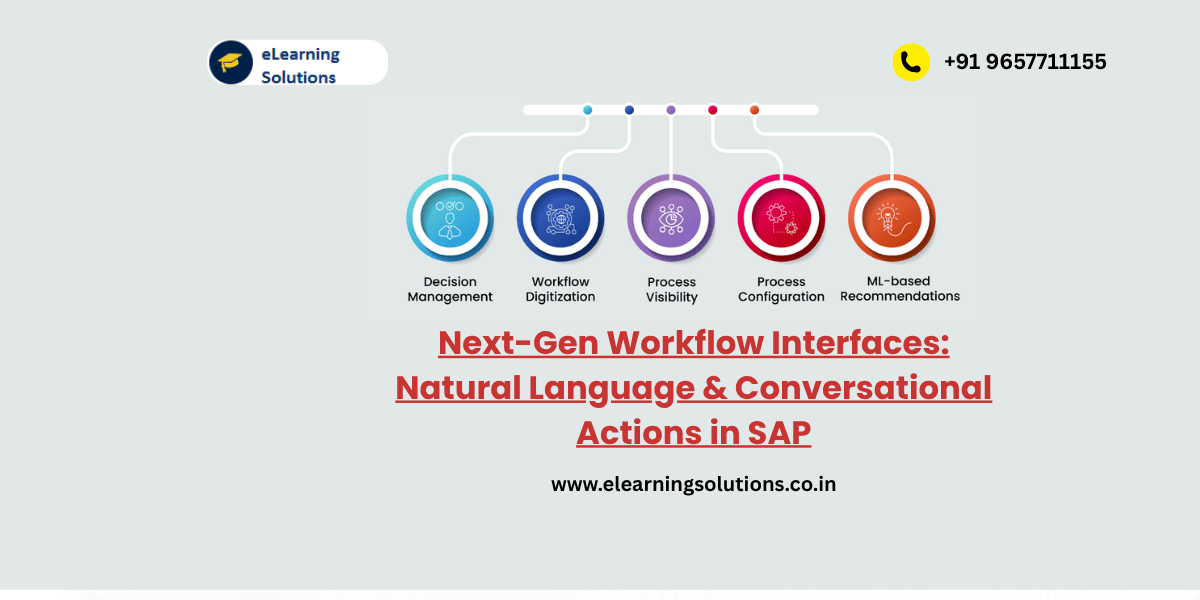
In a world where digital transformation defines business success, SAP continues to revolutionize enterprise automation with next-generation workflow interfaces. Imagine approving invoices, tracking purchase orders, or generating performance reports simply by saying, “Show me pending approvals for today”. This futuristic interaction is no longer a dream — it’s happening now with Natural Language and Conversational Actions in SAP.
As companies move toward a more connected and intelligent business environment, the traditional workflow approach is evolving into an interactive, voice- and text-driven experience. Let’s explore what this means, why it matters, and how it’s transforming the way organizations operate in 2025 and beyond.
Understanding Natural Language & Conversational Workflows
Traditional SAP workflows rely heavily on structured steps, approvals, and user clicks within a system interface. While efficient, these models often demand technical know-how or navigation through multiple menus.
Conversational workflows simplify this by enabling users to interact with SAP using natural language commands — spoken or typed. Integrated with AI-powered assistants like SAP Joule, users can now perform business actions conversationally, just as they would speak to a colleague.
Example:
- Old way: Navigate → Open Purchase Order → Check Approval Status
- New way: “Hey SAP, show me open purchase orders above ₹5,00,000.”
The system instantly retrieves the data, reducing time, effort, and complexity.
How SAP Is Making Workflows Smarter
SAP’s integration of AI, machine learning, and natural language processing (NLP) has given rise to conversational workflow interfaces. These intelligent systems understand intent, context, and action.
Key Components of Next-Gen Workflow Interfaces:
- Natural Language Understanding (NLU):
Interprets user queries or voice commands with human-like understanding. - Conversational Agents (SAP Joule, SAP CoPilot):
Serve as virtual assistants within SAP systems, helping users complete workflow tasks quickly. - Adaptive Workflow Logic:
The system automatically adjusts based on context — such as user role, business unit, or approval level. - Integration with SAP Build Process Automation:
Allows business users to create and modify workflows without writing code.
Why Conversational Workflows Matter in 2025
As AI and automation evolve, organizations are focusing on human-centered experiences that reduce digital fatigue and increase productivity. Conversational workflows are leading this shift for several reasons:
1. Ease of Use
Even non-technical users can interact with complex systems. Employees no longer need to memorize transaction codes or navigate SAP GUI layers.
2. Time Efficiency
Approvals, data queries, and routine updates can be performed instantly using simple voice or text inputs.
3. Accessibility
Conversational workflows break language and interface barriers, enabling seamless use across departments and geographies.
4. Enhanced Employee Engagement
With intuitive systems, employees spend less time on repetitive tasks and more time on decision-making and innovation.
5. Reduced Training Costs
New hires can onboard faster, as natural language replaces complex UI navigation learning curves.
Real-World Applications of Conversational SAP Workflows
Let’s look at where this transformation is making an impact:
🏦 Finance
A financial controller can say, “Show me pending vendor payments over ₹1 lakh,” and instantly receive filtered reports.
Approvals can be granted directly within the chat interface.
🏭 Manufacturing
Supervisors can query, “What’s the status of material request #2034?” and get live workflow updates without switching screens.
🧾 Procurement
Buyers can create purchase requisitions using commands like, “Create a PO for supplier ABC worth ₹2 lakh.”
👨💼 Human Resources
HR executives can approve leave requests, generate attendance reports, or track employee records conversationally.
Industry Insights and Market Trends
According to a 2025 Gartner report, over 70% of enterprise workflow interactions are projected to include AI-driven conversational interfaces. SAP’s continuous investment in Business AI (SAP Joule) and SAP Build Process Automation ensures that its ecosystem stays ahead of this curve.
Major enterprises have already begun adopting conversational workflows to streamline operations:
- Automotive leaders are enabling voice-driven factory reports.
- Financial firms use chatbots for employee reimbursement workflows.
- Retail giants are leveraging SAP CoPilot for automated inventory updates.
These examples highlight the growing demand for AI-augmented process automation that blends human language with system logic.
Practical Tips for Beginners
If you’re new to SAP or just starting your automation journey, here’s how to get started:
- Start Small, Automate Smart:
Begin with a simple workflow — such as leave approvals or invoice validation. - Learn SAP Build Process Automation:
Use SAP’s low-code environment to design workflows without deep coding. - Explore SAP Joule:
Understand how to integrate conversational actions with your existing modules. - Experiment with NLP:
Use AI models to train your SAP system for understanding business-specific language. - Monitor & Improve:
Use analytics tools like SAP Signavio to measure workflow performance and continuously refine processes.
The Future of Workflows: From Clicks to Conversations
The next generation of SAP workflows isn’t about replacing humans — it’s about empowering them. When systems understand language, respond intelligently, and adapt to real-time needs, businesses achieve a truly digital workplace.
Imagine a finance manager closing the monthly report using voice commands, or a procurement officer approving requests while on the move — these scenarios are becoming daily realities.
Conversational SAP workflows are more than a tech trend; they represent the future of efficiency, accessibility, and innovation.
Conclusion: Your Next Step Toward Smarter Workflow Automation
The transformation from traditional workflows to next-gen conversational SAP interfaces is reshaping how businesses function. Whether you’re an SAP consultant, IT manager, or aspiring professional, now is the perfect time to upgrade your skills.
Ready to explore how conversational automation can transform your organization?
www.elearningsolutions.co.in to discover expert-led SAP Workflow courses that help you master AI-driven process automation, workflow design, and SAP Build integration — your first step toward becoming a next-gen SAP professional.
YOU MAY BE INTERESTED IN
How to Convert JSON Data Structure to ABAP Structure without ABAP Code or SE11?
ABAP Evolution: From Monolithic Masterpie


 WhatsApp us