O DATA Architecture and Components

O DATA Architecture

Overview of O DATA Architecture 

O DATA, also known as the Open Data Protocol, is a powerful standard for building and consuming RESTful Web APIs that facilitate seamless data exchange. Its architecture is designed to be simple, flexible, and easy to understand. At the core of O DATA lies the interaction between clients and servers, where clients can access and manipulate data resources exposed by O DATA services. 

The O DATA architecture follows the principles of REST (Representational State Transfer), which emphasize using standard HTTP methods for communication. This approach ensures that O DATA APIs can be accessed from various platforms, including web browsers, mobile devices, and desktop applications. 

O DATA Service and Service Document 

The heart of O DATA lies in the O DATA service, a web endpoint that serves as the entry point to access the available data resources. When a client connects to an O DATA service, it can retrieve a service document that provides valuable metadata about the service and its available entity sets.

The service document acts as a roadmap for the client, detailing the different entity sets exposed by the O DATA service. It allows clients to discover the available resources, their structures, and the relationships between them. With this information, clients can efficiently interact with the O DATA service and perform various data operations.

Entity Sets and Entity Types 

Central to O DATA are two fundamental components: entity sets and entity types.

What is an Entity, Entity Type and Entity Set

Entity Sets:

An entity set is a collection of related entities of the same type. Think of it as a container that holds individual entities. For instance, in an e-commerce application, there may be an entity set called “Products” that contains individual product entities. Similarly, an entity set called “Employees” could hold the data of all the employees in a company.

Entity Types:

Entity types define the structure of individual entities within an entity set. They specify the properties and their data types that describe each entity. For example, an entity type “Product” might have properties like “Name,” “Price,” and “Category,” while an entity type “Employee” could have properties like “Name,” “Age,” and “Job Title.”

By defining entity types, O DATA ensures consistency in the structure of entities within the same entity set, making it easier for clients to understand and process the data.

O DATA Query Options

How to Develop Query Options for an OData Service

O DATA provides powerful query options, allowing clients to retrieve specific data from the O DATA service based on their requirements.

Filtering Data:

Filtering Data in O DATA:

Filtering enables clients to narrow down the data they receive from the O DATA service. Clients can specify filter clauses to fetch entities that meet specific criteria. For example, a client could request all products with a price greater than $50 or all employees from a particular department.

Sorting Data:
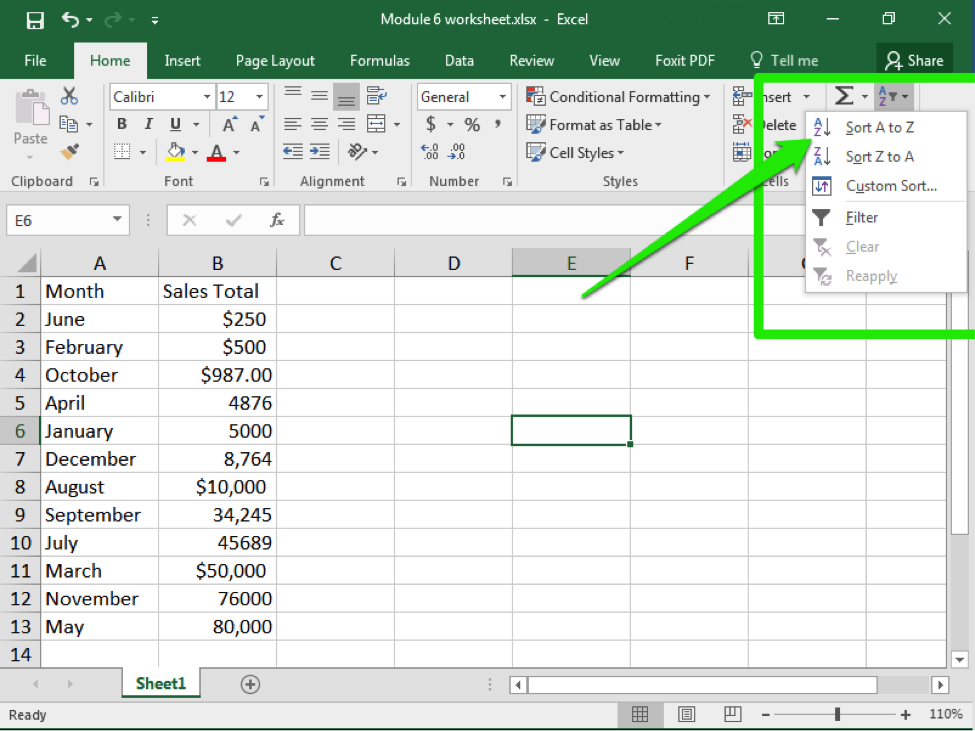
Sorting Data in O DATA

Clients can request sorted data from the O DATA service. Sorting allows entities to be ordered based on specific properties. For instance, a client might request a list of products sorted by their prices in ascending or descending order.

Paging Results in O DATA:

Paging Results in O DATA

When dealing with large datasets, it is crucial to retrieve data in smaller, manageable chunks. O DATA supports paging, where clients can request a subset of data, and the server responds with paginated results. This helps optimize data transfer and processing, especially in scenarios with limited bandwidth or large datasets.

Conclusion

O DATA’s architecture revolves around providing a standardized and efficient way to interact with data-centric Web APIs. By understanding the core components of O DATA, including the service document, entity sets, entity types, and query options, developers can create powerful and scalable APIs that enable seamless data exchange between clients and servers.

The simplicity and flexibility of O DATA’s architecture make it an excellent choice for various applications, including business integrations, cloud services, and Internet of Things (IoT) implementations. With its continued development and adherence to industry standards, O DATA remains at the forefront of data exchange protocols, serving as a cornerstone in modern application development.


FAQs (Frequently Asked Questions)

      1. What is the main purpose of O DATA? O DATA is designed to provide a standardized and efficient way to build and consume RESTful Web APIs that enable seamless data exchange between clients and servers.

      1. Can O DATA APIs be accessed from different platforms? Yes, O DATA APIs can be accessed from various platforms, including web browsers, mobile devices, and desktop applications, thanks to its adherence to RESTful principles and the use of standard HTTP methods.

      1. How does O DATA ensure consistency in data structures? O DATA achieves consistency through the use of entity types, which define the structure of individual entities within an entity set, ensuring uniformity in data representation.

      1. What are the key benefits of using O DATA’s query options? O DATA’s query options, such as filtering, sorting, and paging, provide clients with the flexibility to request specific data subsets and efficiently manage large datasets, improving overall performance and user experience.

      1. Is O DATA suitable for Internet of Things (IoT) applications? Absolutely! O DATA’s support for real-time data streaming and its ability to handle diverse data sources make it a perfect fit for IoT implementations, allowing seamless data management and integration in IoT ecosystems.

    Bonus: How to Create SAP OData ?

    PART-1 PART-3


    ₹25,000.00

    SAP SD S4 HANA

    SAP SD (Sales and Distribution) is a module in the SAP ERP (Enterprise Resource Planning) system that handles all aspects of sales and distribution processes. S4 HANA is the latest version of SAP’s ERP suite, built on the SAP HANA in-memory database platform. It provides real-time data processing capabilities, improved…
    ₹25,000.00

    SAP HR HCM

    SAP Human Capital Management (SAP HCM)  is an important module in SAP. It is also known as SAP Human Resource Management System (SAP HRMS) or SAP Human Resource (HR). SAP HR software allows you to automate record-keeping processes. It is an ideal framework for the HR department to take advantage…
    ₹25,000.00

    Salesforce Administrator Training

    I am text block. Click edit button to change this text. Lorem ipsum dolor sit amet, consectetur adipiscing elit. Ut elit tellus, luctus nec ullamcorper mattis, pulvinar dapibus leo.
    ₹25,000.00

    Salesforce Developer Training

    Salesforce Developer Training Overview Salesforce Developer training advances your skills and knowledge in building custom applications on the Salesforce platform using the programming capabilities of Apex code and the Visualforce UI framework. It covers all the fundamentals of application development through real-time projects and utilizes cases to help you clear…
    ₹25,000.00

    SAP EWM

    SAP EWM stands for Extended Warehouse Management. It is a best-of-breed WMS Warehouse Management System product offered by SAP. It was first released in 2007 as a part of SAP SCM meaning Supply Chain Management suite, but in subsequent releases, it was offered as a stand-alone product. The latest version…
    ₹25,000.00

    Oracle PL-SQL Training Program

    Oracle PL-SQL is actually the number one database. The demand in market is growing equally with the value of the database. It has become necessary for the Oracle PL-SQL certification to get the right job. eLearning Solutions is one of the renowned institutes for Oracle PL-SQL in Pune. We believe…
    ₹25,000.00

    Pega Training Courses in Pune- Get Certified Now

    Course details for Pega Training in Pune Elearning solution is the best PEGA training institute in Pune. PEGA is one of the Business Process Management tool (BPM), its development is based on Java and OOP concepts. The PAGA technology is mainly used to improve business purposes and cost reduction. PEGA…
    ₹27,000.00

    SAP PP (Production Planning) Training Institute

    SAP PP Training Institute in Pune SAP PP training (Production Planning) is one of the largest functional modules in SAP. This module mainly deals with the production process like capacity planning, Master production scheduling, Material requirement planning shop floor, etc. The PP module of SAP takes care of the Master…
    [/vc_row]
    ₹25,000.00

    SAP SD S4 HANA

    SAP SD (Sales and Distribution) is a module in the SAP ERP (Enterprise Resource Planning) system that handles all aspects of sales and distribution processes. S4 HANA is the latest version of SAP’s ERP suite, built on the SAP HANA in-memory database platform. It provides real-time data processing capabilities, improved…
    ₹25,000.00

    SAP HR HCM

    SAP Human Capital Management (SAP HCM)  is an important module in SAP. It is also known as SAP Human Resource Management System (SAP HRMS) or SAP Human Resource (HR). SAP HR software allows you to automate record-keeping processes. It is an ideal framework for the HR department to take advantage…
    ₹25,000.00

    Salesforce Administrator Training

    I am text block. Click edit button to change this text. Lorem ipsum dolor sit amet, consectetur adipiscing elit. Ut elit tellus, luctus nec ullamcorper mattis, pulvinar dapibus leo.
    ₹25,000.00

    Salesforce Developer Training

    Salesforce Developer Training Overview Salesforce Developer training advances your skills and knowledge in building custom applications on the Salesforce platform using the programming capabilities of Apex code and the Visualforce UI framework. It covers all the fundamentals of application development through real-time projects and utilizes cases to help you clear…
    ₹25,000.00

    SAP EWM

    SAP EWM stands for Extended Warehouse Management. It is a best-of-breed WMS Warehouse Management System product offered by SAP. It was first released in 2007 as a part of SAP SCM meaning Supply Chain Management suite, but in subsequent releases, it was offered as a stand-alone product. The latest version…
    ₹25,000.00

    Oracle PL-SQL Training Program

    Oracle PL-SQL is actually the number one database. The demand in market is growing equally with the value of the database. It has become necessary for the Oracle PL-SQL certification to get the right job. eLearning Solutions is one of the renowned institutes for Oracle PL-SQL in Pune. We believe…
    ₹25,000.00

    Pega Training Courses in Pune- Get Certified Now

    Course details for Pega Training in Pune Elearning solution is the best PEGA training institute in Pune. PEGA is one of the Business Process Management tool (BPM), its development is based on Java and OOP concepts. The PAGA technology is mainly used to improve business purposes and cost reduction. PEGA…
    ₹27,000.00

    SAP PP (Production Planning) Training Institute

    SAP PP Training Institute in Pune SAP PP training (Production Planning) is one of the largest functional modules in SAP. This module mainly deals with the production process like capacity planning, Master production scheduling, Material requirement planning shop floor, etc. The PP module of SAP takes care of the Master…

    Leave a Reply

    X
    WhatsApp WhatsApp us
    Call Now Button