

Introduction to O DATA Formats and Protocol
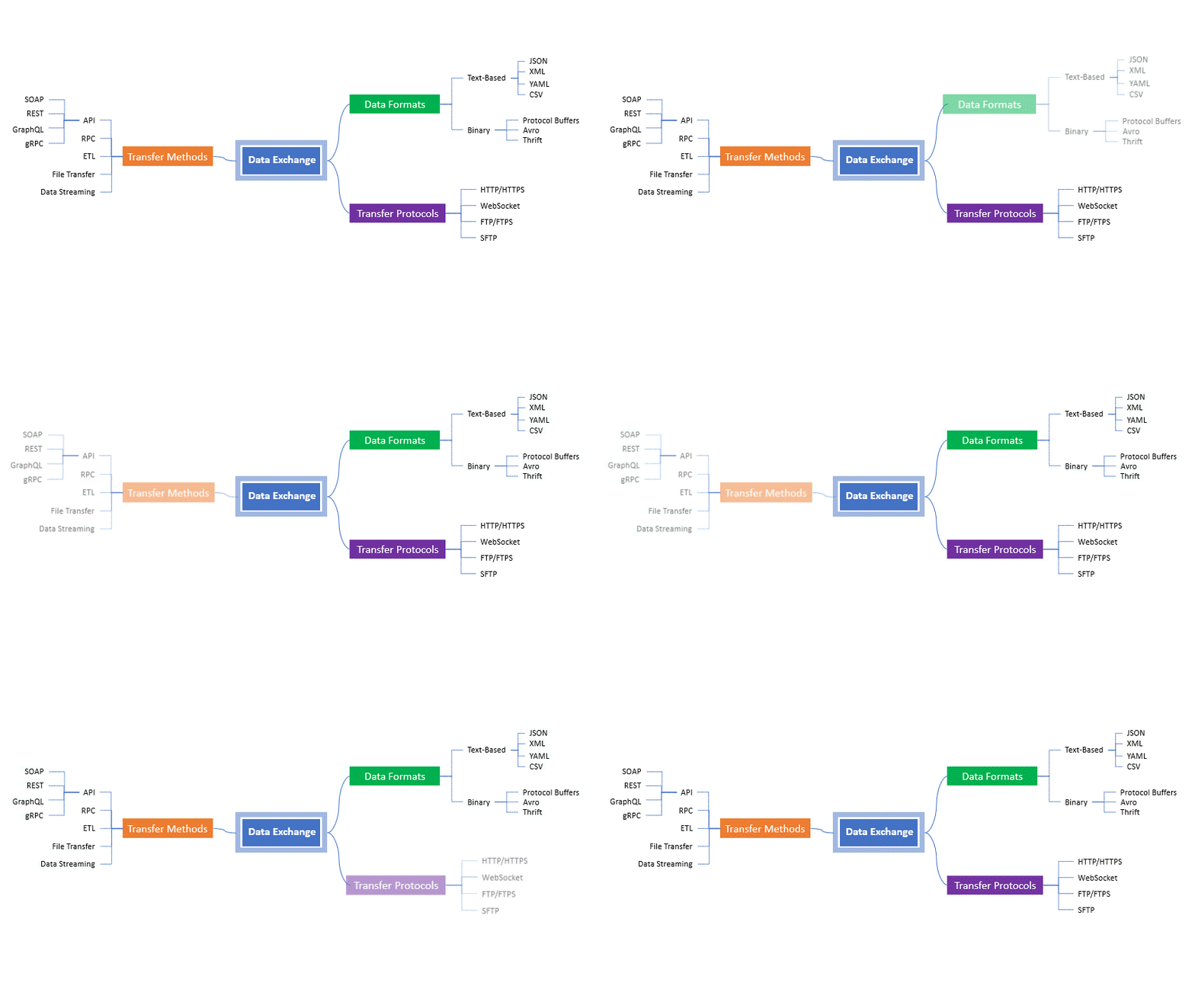
O DATA, the Open Data Protocol, is a powerful standard for building and consuming Web APIs that enable data exchange between clients and servers. One of the key factors contributing to O DATA’s success is its support for various data formats and a robust communication protocol. In this article, we will explore O DATA formats and the underlying protocol, focusing on their importance, benefits, and a comparison between two popular formats: JSON and AtomPub.
1. JSON and AtomPub Formats
JSON (JavaScript Object Notation)

JSON is a lightweight and widely used data-interchange format that is easy for both humans and machines to read and write. It is based on a key-value pair structure and is commonly used for transmitting data between a server and a web application as an alternative to XML. JSON has become the de facto standard for O DATA APIs due to its simplicity and compactness.
AtomPub (Atom Publishing Protocol)

AtomPub, based on the Atom Syndication Format, is another format used in O DATA. It is a standard for publishing and editing web resources. While it is not as widely adopted as JSON in O DATA APIs, it offers a more standardized way of representing data and provides features such as versioning and optimistic concurrency control.
JSON vs. AtomPub: A Comparative Overview
| Feature | JSON | AtomPub |
|---|---|---|
| Purpose | Lightweight data interchange format | Standard for publishing and subscribing to web feeds |
| Structure | Key-value pairs, arrays, and objects | XML-based, with defined elements and attributes |
| Readability | Generally more human-readable | Less human-readable due to XML syntax |
| Complexity | Simpler to parse and generate | More complex structure |
| Data Types | Supports basic data types (string, number, boolean, null, array, object) | Supports a wider range of data types through XML schema |
| Metadata | Limited metadata support | Rich metadata support through XML elements |
| Links | Supports links but with limited structure | Provides standardized link elements for navigation and related resources |
| Updates | No built-in support for updates | Supports updates and versioning through XML elements |
| Common Use Cases | Data exchange between APIs, configuration files | Web feeds, syndication, and data distribution |
| Examples | REST APIs, configuration files | RSS feeds, podcast feeds |
2. Differences and Usage of Each Format
Differences between JSON and AtomPub
The primary differences between JSON and AtomPub are in their data structures and intended use cases:
-
- Data Structure: JSON uses a key-value pair structure, making it ideal for representing objects and collections of data. AtomPub, on the other hand, uses XML-based entries and feeds, which are well-suited for publishing and syndicating web resources.
-
- Readability: JSON is generally more readable and compact compared to AtomPub’s XML-based format, which can be more verbose.
-
- Adoption: JSON has gained widespread adoption in modern web development, whereas AtomPub is mainly used in specific scenarios, such as content syndication and feed readers.
Usage of Each Format in O DATA
JSON is the preferred format for most O DATA implementations due to its simplicity, ease of parsing, and widespread support in programming languages. It is well-suited for scenarios where data needs to be efficiently transmitted between the server and the client in a human-readable format.
AtomPub, while less common in O DATA APIs, finds use in cases where versioning, publishing, and syndication of resources are essential. It allows for more fine-grained control over data manipulation and is particularly useful in content management and feed-based applications.
3. Content Negotiation in O DATA
Understanding Content Negotiation
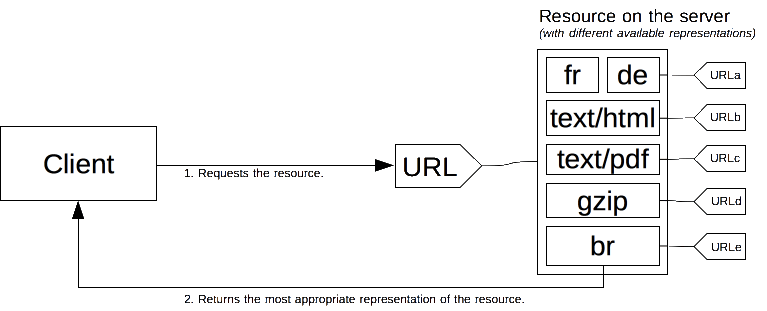
Content negotiation is a mechanism used by O DATA services to determine the most appropriate data format to send in response to a client’s request. When a client sends a request to an O DATA endpoint, it includes an “Accept” header specifying the desired data format (e.g., JSON or AtomPub). The server then processes the request and responds with data in the requested format, if supported.
Benefits of Content Negotiation
Content negotiation provides flexibility and interoperability in O DATA services. It allows clients to specify their preferred data format, ensuring that they receive data in a format they can readily process. This flexibility also simplifies the integration of O DATA services with different clients and platforms.
4. O DATA Implementations and Libraries
O DATA Implementations
Various programming frameworks and platforms support O DATA implementations. These implementations provide tools and libraries for building O DATA services quickly and efficiently. Some popular O DATA implementations include:
-
- ASP.NET Web API: A framework for building O DATA services on the Microsoft .NET platform.
-
- Node.js O Data: A Node.js library that allows developers to create O DATA services using JavaScript.
-
- Apache Olingo: An open-source Java library that provides O DATA implementation for Java-based applications.
Benefits of O DATA Libraries
O DATA libraries and implementations abstract much of the complexity of O DATA protocol and format handling, allowing developers to focus on building robust and feature-rich O DATA services. They provide support for content negotiation, query processing, and data formatting, making O DATA development more accessible to developers across different ecosystems.
Conclusion
O DATA formats and protocol play a vital role in enabling efficient data exchange between clients and O DATA services. JSON and AtomPub are two commonly used formats in O DATA, each with its strengths and use cases. Content negotiation further enhances flexibility and interoperability, while O DATA implementations and libraries simplify the process of building O DATA services across various platforms. By understanding the different formats, utilizing content negotiation, and leveraging O DATA implementations, developers can build powerful and scalable O DATA APIs that cater to diverse client requirements.
FAQs (Frequently Asked Questions)
-
- Can I use both JSON and AtomPub in the same O DATA service? While it is possible to support multiple formats in an O DATA service, it is recommended to use a single format (usually JSON) to maintain consistency and simplify client interactions.
-
- How does content negotiation impact O DATA service performance? Content negotiation adds minimal overhead to O DATA service performance, as it involves selecting the appropriate format based on client preferences before generating the response.
-
- What is the main advantage of using JSON in O DATA? JSON’s main advantage lies in its simplicity and compactness, which allows for faster data parsing and transmission over the network.
-
- Can I create custom O DATA implementations in other programming languages? Yes, developers can create custom O DATA implementations using programming languages that provide HTTP server capabilities and support for JSON and XML parsing.
-
- Do O DATA libraries support both JSON and AtomPub formats? Most O DATA libraries offer support for JSON, while support for AtomPub may vary. It is essential to check the documentation and capabilities of the specific library being used.
Bonus: SAP ABAP – From Basic to Advanced OData
PART-5 PART-7Interested in this SAP Classes ? Fill Your Details Here
Find Your Preferred Courses


 WhatsApp us