

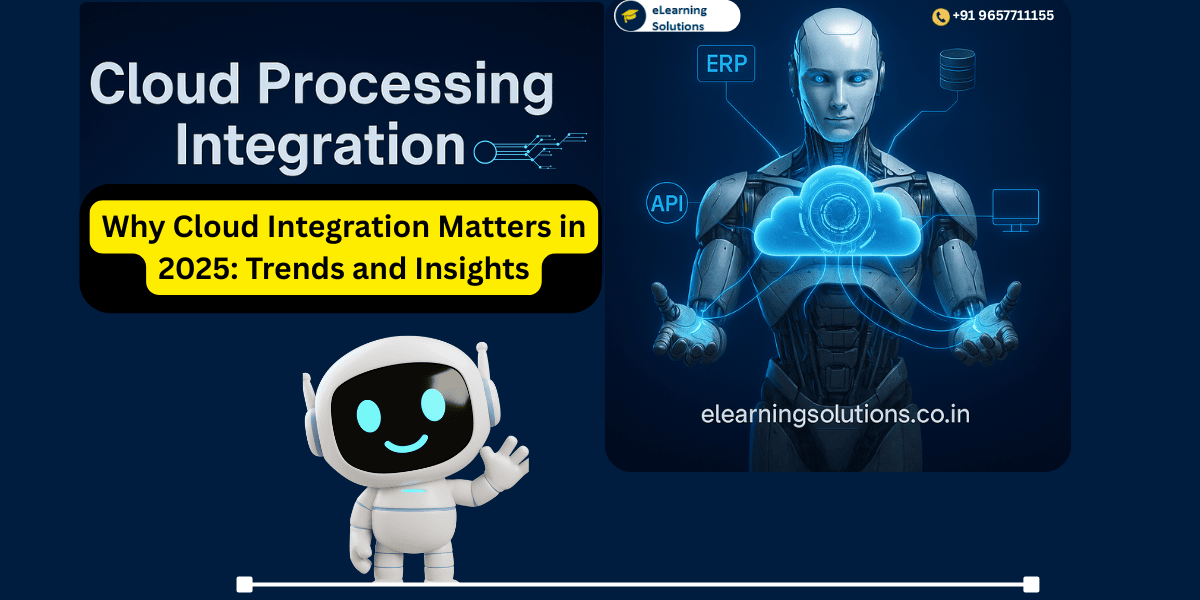
As we step into 2025, cloud integration is no longer an optional technology—it’s the backbone of modern business transformation. Companies across industries are realizing that connecting systems, applications, and data through the cloud isn’t just about convenience; it’s about survival, growth, and innovation.
If you’re an employee looking to upskill, a business professional aiming to future-proof your organization, or a beginner curious about the evolving digital landscape, this guide will walk you through why cloud integration matters now more than ever.
🌐 What Is Cloud Integration?
Cloud integration is the process of connecting different applications, systems, and data sources—whether cloud-based or on-premises—so they work together seamlessly. Instead of fragmented silos, cloud integration creates a unified ecosystem where data flows freely and processes run automatically.
Think of it like a digital nervous system: just as your body’s nerves connect different organs, cloud integration connects multiple apps and systems, ensuring real-time coordination.
Why Cloud Integration Is Critical in 2025
Here are the key reasons businesses are prioritizing integration this year:
- Hybrid & Multi-Cloud Flexibility
Organizations no longer rely on a single provider. Integration ensures smooth communication across multiple platforms. - Real-Time Data Insights
In 2025, waiting hours—or even minutes—for data updates can be costly. Integrated systems allow instant decision-making. - AI & Automation
Modern businesses use cloud integration to embed artificial intelligence into workflows, from predicting customer needs to automating repetitive tasks. - Security & Compliance
With growing data privacy regulations, integrated systems provide centralized governance and reduce compliance risks. - Scalability & Growth
As businesses expand, cloud integration ensures systems can scale without disruption.
💡 Industry projections show the cloud integration market heading toward trillion-dollar value, highlighting its role as a cornerstone of digital transformation.
Key Trends to Watch in 2025
- Event-Driven Architectures – Businesses are moving toward real-time triggers for everything from customer orders to IoT device alerts.
- Serverless & Microservices – Lightweight, modular systems require integration platforms that adapt seamlessly.
- Sustainability & Efficiency – Organizations are prioritizing cloud strategies that balance performance with environmental responsibility.
- Data Sovereignty – Companies are increasingly conscious of where their data lives, making integration essential for compliance.
Real-World Applications
- Retail: Syncing inventory across online and physical stores in real time to improve customer satisfaction.
- Healthcare: Connecting electronic health records, lab results, and telehealth platforms for complete patient views.
- Finance: Linking payment systems, fraud detection, and analytics tools to enhance trust and speed.
- Education: Unifying learning management systems, student portals, and analytics dashboards to enrich learning outcomes.
Practical Tips for Beginners
- Start with High-Impact Systems – Identify apps that affect customer experience or revenue and integrate those first.
- Adopt API-Led Connectivity – APIs act as bridges, ensuring scalability and flexibility in future projects.
- Use Low-Code Integration Tools – Many platforms now allow “drag-and-drop” integration, making it accessible to non-technical users.
- Keep Security Front & Center – Build encryption, access control, and monitoring into every integration step.
- Commit to Continuous Learning – Cloud technologies evolve quickly. Staying updated is key to staying competitive.
Why It Matters to You
For businesses, integration drives efficiency, lowers costs, and unlocks innovation. For employees, understanding cloud integration is a career accelerator—giving you the skills to contribute directly to digital transformation initiatives.
Simply put: cloud integration is the gateway to growth in 2025 and beyond.
Final Thoughts & Next Steps
Cloud integration is shaping the future of business in 2025 by delivering real-time insights, enhanced customer experiences, and resilient systems. Whether you’re just starting or already on the journey, embracing integration today sets you up for tomorrow’s success.
👉 Ready to go deeper? Explore expert resources and professional courses at elearningsolutions.co.in and take your next step in mastering cloud integration.


 WhatsApp us